
Description
Dacryodes edulis (G. Don) H.J. Lam is a medium-sized, evergreen tree belonging to the Burseraceae (frankincense) family, commonly known as the African pear or safou tree. The generic name Dacryodes is derived from the Greek word dakruon, meaning “tear,” in reference to the resin droplets that exude from the bark when cut. The specific epithet edulis means “edible,” referring to the tree’s nutritious fruits. The tree typically reaches heights of 12–20 meters in cultivation but can grow up to 40 meters in the wild. It has a dense, dark crown, a short trunk, and a cylindrical base with low branches. The bark is greyish to grey-brown, peeling off in thin, irregular scales, and marked with lenticels and horizontal folds. When damaged, the bark exudes a translucent, whitish resin with a turpentine-like odour.
The leaves are alternate, imparipinnately compound (odd-pinnate), with 5–12 pairs of opposite leaflets plus a terminal one. The basal leaflets are reduced and inserted close to the branch. The leaflets are oblong, up to 20 cm long and 6 cm wide, with a short petiole (leaflet stalk), an asymmetrical base, an acuminate tip, and a very glossy upper surface. Young leaves are characteristically red. The inflorescences are reddish-brown, pubescent panicles bearing small flowers with three petals. The fruit is a drupe, typically pink turning to dark blue or violet-black when ripe, measuring 1.5–6 cm in length and 1–3 cm in width. It contains a smooth, fragile stone (seed) with an ellipsoid kernel. The fruit has a distinct turpentine scent and a buttery texture when cooked.
Dacryodes edulis is native to the Gulf of Guinea and Central Africa, ranging from Nigeria through Cameroon, Gabon, Equatorial Guinea, the Republic of Congo, the Democratic Republic of Congo, and Angola. It grows naturally in humid tropical forests, secondary forests, and old fallows, and is widely cultivated in villages, gardens, and fields throughout West and Central Africa. The tree is classified as Least Concern (LC) on the IUCN Red List due to its wide distribution and cultivation.
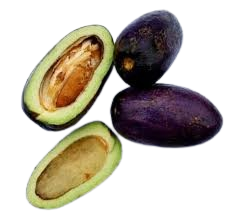
Common names
- English: African pear, Native pear, Bush pear, African plum, Bush butter tree, Butterfruit, Eben tree
- French: Safoutier (tree), Safou (fruit)
- Yoruba: Elemi, Ibagbo
- Igbo: Ùbé (the general word for “pear”)
- Igbo (Owerri): Ùbwe ọyọ
- Igbo (Awka): Úbwé
- Edo (Bini): Órúnmwun (meaning “something edible”)
- Efik: Ébèn, Ébèn mbàkárá (the latter also applied to avocado)
- Urhobo: Orumu
- Abua: Ùbé
- Bokyi: Boshu
- Cameroon: Messa, Plum, Saffouier
- Equatorial Guinea & Gabon: Atanga
- Congo & DRC: Safou, Nsafu
Health Benefits
The fruit pulp of Dacryodes edulis is nutrient-dense, providing lipids (22–60% oil content depending on variety and ripeness), proteins, carbohydrates, dietary fibre, essential amino acids (e.g., lysine, leucine), vitamins (A, C, E), and minerals (high in potassium, calcium, magnesium, iron, zinc, phosphorus). The oil is rich in fatty acids such as palmitic, oleic, and linoleic acids. Bioactive compounds include polyphenols, flavonoids, terpenoids, and antioxidants. Potential benefits include:
- Antimalarial Properties: The hydroethanolic extract from the leaves of D. edulis has demonstrated good antiplasmodial activity against both chloroquine-sensitive (3D7) and multidrug-resistant (Dd2) strains of Plasmodium falciparum, with IC50 values of 3.10 and 3.56 μg/mL, respectively. The isolated compound 3,3′,4-tri-O-methylellagic acid exhibited the highest activity against the resistant strain, with an IC50 value of 0.63 μg/mL . These findings support the traditional use of the plant in Cameroonian and other African folk medicines to treat malaria and fever.
- Antioxidant Activity: The leaves of D. edulis have been shown to exhibit very high antioxidant activity, scavenging DPPH (62–93%) and hydrogen peroxide radicals (60–97%) at different concentrations. This activity is attributed to the presence of flavonoids, phenolics, and other polyphenolic compounds . These antioxidants help combat oxidative stress, which is implicated in chronic diseases such as diabetes, cancer, and cardiovascular disorders.
- Anticancer Potential: Phytochemicals and standardized extracts from D. edulis have demonstrated anti-carcinogenic activities in laboratory studies. The presence of terpenoids and other secondary metabolites contributes to its potential in cancer therapy or chemoprevention.
- Antimicrobial Effects: Extracts from the leaves, fruit, and resin of D. edulis exhibit broad-spectrum antimicrobial activity. The resin has traditionally been used as a disinfectant and for treating skin infections.
- Antidiabetic Properties: The high concentration of antioxidants in D. edulis may explain its traditional use in treating diabetes, as oxidative stress is a key factor in the development and progression of the disease. Research has confirmed anti-diabetic and anti-hyperglycemic activities.
- Anti-inflammatory and Hepatoprotective Effects: Studies have reported that isolates from D. edulis exhibit anti-inflammatory and hepatoprotective (liver-protecting) activities, highlighting its pharmacological potential for managing inflammatory conditions and liver diseases .
- Wound Healing and Skin Health: The resin exudate is applied alone or mixed with palm oil to cure various skin diseases, including wounds, ringworms, and craw-craw (a parasitic skin infection) . Crushed leaf liquid is also administered to affected areas to treat skin diseases and ectoparasite infections.
- Cardiovascular and metabolic support: Potassium and healthy unsaturated fats aid blood pressure regulation and cholesterol management; potential antidiabetic effects through improved glucose uptake, insulin sensitivity, and lipid regulation.
- Dental and Oral Health: A decoction of the bark or leaves is used as a mouthwash or gargle to treat toothache, gum problems, tonsillitis, and to maintain good oral hygiene.
- Digestive Health and Immune Support: Fibre promotes gut health; vitamins A and C boost immunity and skin/eye health. Decoctions of the leaves are used to treat digestive disorders . The bark decoction is used to treat dysentery and diarrhea.
- Anaemia Management: The bark decoction is used traditionally to treat anaemia.
Other benefits
Dacryodes edulis plays a vital socio-economic role in rural West and Central Africa, including Nigeria, as a cash and food crop that supports livelihoods, food security, and poverty alleviation. Fruits are widely traded locally and across borders (e.g., from Cameroon to Nigeria and Europe), generating income for farmers, vendors, and processors.
- Staple Food Crop: Dacryodes edulis is one of the most important indigenous fruit trees in West and Central Africa. It was ranked second in importance after Irvingia gabonensis (African mango) in priority setting for tree domestication in the humid lowlands of the region. The fruit is a rich source of protein, fat, and carbohydrates, and is considered an essential nutritional source.
- Culinary Uses: The fruit pulp, rich in oil (up to 30-40%), is highly valued. The fruits are typically boiled or simmered in water to soften the pulp before consumption. They can also be roasted over hot coals. The softened pulp is eaten alone or with boiled corn, or used in the preparation of soups, sauces, and stews.
- Economic and Social Value: The fruit is of immense domestic importance to rural and urban dwellers in many countries, especially Nigeria and Cameroon, where it is widely cultivated, consumed, and marketed. Rural dwellers are engaged in the collection, processing, and sale of the fruits, which enhances economic empowerment, provides rural employment, and contributes to poverty alleviation. Thus, it has the potential to improve nutrition, boost food security, and foster rural development.
- Honey Production: The tree is an excellent melliferous plant (bee forage), supporting honey production.
- Timber and Wood Uses: While not extensively exploited industrially, the wood is used locally for various purposes.
- Cosmetic and Topical Applications: A lotion for smoothing the skin can be made by adding avocado pulp, palm kernel oil, and spices to the resin exudate. The leaves are used in South-West Nigeria as a stretch mark remover.
How it is used
- As Food (Culinary):
- Boiled Fruit: The ripe or semi-ripe fruits are washed and boiled in water for 10-20 minutes until the pulp softens. They are then drained and eaten as a snack or side dish, often with salt or ground pepper.
- Roasted Fruit: Fruits are placed on hot coals or in an oven and roasted until the skin chars and the pulp softens.
- Soups and Sauces: The softened pulp can be added to soups, stews, and sauces as a thickening and flavoring agent.
- Pulp Oil: The pulp oil can complement or substitute other edible oils in cooking or baking (e.g., boosting protein in biscuits).
- With Boiled Corn or Bread: The boiled fruit is commonly eaten alongside boiled corn or bread as a satisfying meal.
- As Medicine (Traditional):
- Leaf Decoction: Leaves are boiled in water; the resulting decoction is taken orally for digestive disorders, toothache, earache, and as an antimalarial remedy. It can also be used as a mouthwash for gum problems and tonsillitis.
- Bark Decoction: The stem bark is boiled in water; the decoction is taken to treat dysentery, diarrhea, and anaemia.
- Resin (Sap): The resin exuded from cut bark is applied topically to wounds, cuts, ringworms, craw-craw, and other skin diseases, either alone or mixed with palm oil.
- Crushed Leaves: Fresh leaves are crushed, and the expressed juice or the pounded leaf paste is applied to skin diseases, wounds, and snakebites.
- Root Decoction: Roots cooked with other herbs are eaten to combat beriberi and rickets.
- Powdered Leaves: Dried, powdered leaves are simmered with oils and other ingredients and used to ease labour pains or promote safe delivery.
- Other Uses:
- Chewing Sticks: Stem twigs are used as chewing sticks for oral hygiene.
- Honey Production: The tree is maintained near apiaries as a source of nectar for bees.
Side Effects/Caution
- Generally Recognized as Safe in Food Amounts: The fruit has been consumed as a food for centuries and is considered safe for human consumption. The leaves and bark are widely used in traditional medicine with no reported acute toxicity at commonly used doses.
- Low Acute Toxicity: Scientific studies have demonstrated that extracts from D. edulis have a low acute toxicity profile. The median lethal dose (LD50) for the seed extract was greater than 5000 mg/kg body weight in animal studies, with no mortality recorded at this dose. Similarly, the hydroethanolic leaf extract was nontoxic in vivo with an LD50 greater than 2000 and 5000 mg/kg.
- Potential for Chronic Toxicity with Long-Term Use: While acute toxicity is low, a 28-day sub-acute oral administration study of the seed extract in rats revealed significant elevations in plasma alanine transaminase (ALT) and aspartate transaminase (AST) activities (indicators of liver stress), decreased albumin levels, and compromised structural integrity of the liver and kidney. These alterations did not reverse after a 2-week recovery period. These findings suggest that long-term use of concentrated extracts, particularly from the seeds, may cause irreversible hepatic (liver) and renal (kidney) damage.
- Caution for Medicinal Use: While traditional uses are widespread, individuals using D. edulis extracts for medicinal purposes over extended periods should exercise caution and consult a healthcare professional. The observed effects on liver and kidney biomarkers strongly indicate that chronic use of extracts may pose health risks.
- Pregnancy and Breastfeeding: Traditionally, the leaves are used to ease labour pains and promote safe delivery . However, the safety of medicinal doses during pregnancy and lactation has not been rigorously established in clinical studies. Pregnant and breastfeeding women should consult a healthcare provider before using medicinal preparations.
- Fruit Spoilage: The fruit has a very short post-harvest shelf life, softening within 2-3 days at room temperature. Spoiled fruits should be discarded, as they may harbour harmful microorganisms.
- Allergic Reactions: As with any plant product, rare allergic reactions may occur in sensitive individuals. The resin has a strong turpentine-like odour that may be irritating to some.
- Digestive issues: High fat and fibre content may cause mild bloating, loose stools, or oily faeces if eaten in excess, especially by sensitive individuals.
- Other: Heat treatment (boiling/roasting) affects nutrient levels—roasting may preserve or enhance some bioactives better than boiling in certain cases.
References
- “Dacryodes edulis (G. Don) H.J. Lam.” Integrated Taxonomic Information System (ITIS), www.itis.gov/servlet/SingleRpt/SingleRpt?search_topic=TSN&search_value=506419.
- “Dacryodes edulis (G.Don) H.J.Lam.” Plants of the World Online, Royal Botanic Gardens Kew, powo.science.kew.org/taxon/urn:lsid:ipni.org:names:127880-1.
- “Dacryodes edulis (GAAC).” PlantUse, plantuse.plantnet.org/fr/Dacryodes_edulis_(GAAC).
- “Dacryodes edulis.” Wikipedia, Wikimedia Foundation, en.wikipedia.org/wiki/Dacryodes_edulis.
- “Dacryodes edulis.” Wikipedia, Wikimedia Foundation, en.wikipedia.org/wiki/Dacryodes_edulis. Accessed 16 Apr. 2026.
- Ajayi, I. A., and R. A. Adesanwo. “Comparative Study of the Mineral Element and Fatty Acid Composition of Dacryodes edulis Pulp and Seed.” World Journal of Agricultural Sciences, vol. 5, no. 3, 2009, pp. 279–283.
- Burkill, H.M. “Dacryodes edulis (G. Don) H. J. Lam [family BURSERACEAE].” The useful plants of west tropical Africa, Vol. 1, 1985. JSTOR, plants.jstor.org/stable/history/10.5555/al.ap.upwta.1_605.
- FAO. Non-Wood Forest Products of Central Africa: Current Research Issues and Prospects for Conservation and Development. Food and Agriculture Organization, 2003.
- Kapseu, C., et al. “Chemical Composition of Dacryodes edulis Fruit.” African Journal of Biotechnology, 2002.
- Kouam, Alain D., et al. “In vitro antiplasmodial activity and toxicological profile of extracts, fractions and chemical constituents of leaves and stem bark from Dacryodes edulis (Burseraceae).” BMC Complementary Medicine and Therapies, vol. 23, 2023, p. 155. BMC, doi:10.1186/s12906-023-03958-9.
- Leakey, R. R. B. Underutilized and Underexploited Horticultural Crops: Issues and Opportunities. ISHS, 2001.
- Nwaogu, M. U., et al. “African Pear (Dacryodes edulis) Pulp Antioxidants and Bioactive Compounds: Outcome of Heat Treatment.” Food Chemistry Advances, 2024.
- Obame, L. C., et al. “Hexane Extract of Dacryodes edulis Fruits Possesses Anti-Sickling and Antioxidant Activities.” Journal of Medicinal Plants Research, 2016.
- Ogbuewu, I. P., et al. “Toxicological profile of Dacryodes edulis (G. Don.) H. J. Lam. and Persea americana M. seeds in male Wistar rats.” Comparative Clinical Pathology, vol. 32, 2023, pp. 43-52. Springer, doi:10.1007/s00580-022-03411-8.
- Omonhinmin, Conrad A. “Ethnobotany of Dacryodes edulis (G. Don) H.J. Lam in Southern Nigeria: Practices and Applications among the Yoruba Speaking People.” Ethnobotany Research & Applications, vol. 10, 2012, pp. 175–84.
- Onyekwelu, Jonathan C., and Bernd Stimm. “Dacryodes edulis (G. Don) H. J. Lam, 1932.” Enzyklopädie der Holzgewächse: Handbuch und Atlas der Dendrologie, edited by Bernd Stimm et al., Wiley, 2017. Wiley Online Library, doi:10.1002/9783527678518.ehg2014019.
- Orwa, C., et al. Agroforestree Database: A Tree Reference and Selection Guide. World Agroforestry Centre, 2009.
- Oyedeji, O. O., et al. “Nutritional compositions and bioactivities of Dacryodes species: A review.” Food Chemistry, vol. 165, 2014, pp. 247-255. ScienceDirect, doi:10.1016/j.foodchem.2014.05.084.
- Swana, L., et al. “The Genus Dacryodes Vahl.: Ethnobotany, Phytochemistry and Pharmacological Activities.” Pharmaceuticals, vol. 16, no. 6, 2023, p. 775.
- Tchamgoue, Joseph, et al. “The Genus Dacryodes Vahl.: Ethnobotany, Phytochemistry and Biological Activities.” Pharmaceuticals, vol. 16, no. 5, 2023, p. 775. PMC (PubMed Central), pmc.ncbi.nlm.nih.gov/articles/PMC10223253/.