
Description
Elaeis guineensis Jacq., commonly known as the African oil palm, is a monocotyledonous plant species belonging to the Arecaceae (palm) family . It is the principal source of palm oil and palm kernel oil worldwide and is the most important perennial oil crop in the tropics.
Morphology: The plant is a solitary-stemmed, evergreen, upright palm, typically reaching heights of 10–20 meters (30–65 feet) or more, with a trunk diameter of up to 50 cm. The stout trunk is usually covered by persistent leaf bases on the upper portion, becoming bare and ringed below.
Leaves: The leaves are large, pinnate (feather-shaped), and clustered at the stem’s apex, forming a dense crown. They measure 3–4.5 meters (10–15 feet) in length. The leaflets are numerous (up to 120 cm long), arranged irregularly in fascicles (clusters) of 4 or 5, spreading in different directions. The lower leaflets on the petiole (leaf stalk) are often reduced to sharp spines, a key identifying feature of the tree.
Flowers: The tree is monoecious, meaning male and female flowers are separate but borne on the same plant. The male inflorescences are comprised of multiple, finger-like spikelets (7-12 cm long), densely packed with small flowers, while the female inflorescences are larger, head-like, and borne close to the trunk among the leaves . Flowering occurs throughout the year under favorable conditions.
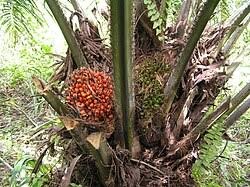
Fruit: The fruit is a large, ovoid or ellipsoid drupe, measuring 3–5 cm in length, which ripens from green to bright orange-red. The fruit grows in large, compact bunches (weighing 10–40 kg) and consists of three main layers: the outer, oily exocarp (skin), the fleshy, fibrous mesocarp (pulp) which is the source of crude palm oil, and a hard, black endocarp (shell) protecting the kernel (seed), from which palm kernel oil is extracted.
Origin and Distribution: Elaeis guineensis is indigenous to the tropical rainforest belt of West and Central Africa, ranging from Guinea to northern Angola. The greatest genetic diversity is found in southeastern Nigeria and western Cameroon, with fossil evidence pointing to the Niger Delta as its most likely center of origin. Today, it is widely cultivated throughout the tropics for oil production and has become naturalized in many regions, including parts of the Pacific, South America, and southern Florida.
Cultivation Notes: The tree requires fertile, well-drained soils, ample rainfall, and high temperatures. The first fruits appear 3-4 years after planting, and bunches ripen 5-6 months after pollination.
Common names (including Nigerian)
- English: African oil palm, Oil palm
- French: Palmier à huile d’Afrique
- Portuguese: Dendezeiro, Palmeira do dendê
- Swahili (East Africa): Mchikichi
- Igbo: Nkwu (Tree), Akwu (Fruit), Mmanu (palm oil)
- Yoruba: Òpẹ̀ (Tree), Eyin (Fruit), Epo pupa (palm oil)
- Hausa: Kwakwar manja, Manja (palm oil)
- Edo (Bini): Udin
- Urhobo: Orien
- Tiv: Irile
- Nupe: Zukunnu
Health Benefits
A 2025 comprehensive review highlights that Elaeis guineensis exhibits a wide range of pharmacological activities, making it a valuable source for alternative medicine and nutraceutical development.
- Nutritional Composition: Palm oil is one of the richest natural sources of vitamin E (specifically tocotrienols) and provitamin A (carotenoids, including beta-carotene and lycopene). The vibrant red color of unrefined palm oil is due to its high carotenoid content. It is also rich in various phenolic compounds, flavonoids, and fatty acids.
- Antioxidant Properties: Numerous studies have confirmed the potent antioxidant activity of extracts from the leaves, fruits, and seeds of E. guineensis. This effect is attributed to its high concentration of bioactive compounds, including flavonoids (such as luteolin, orientin, and isoorientin) and phenolic acids. Antioxidants help neutralize harmful free radicals in the body, reducing oxidative stress that is linked to chronic diseases like cancer, heart disease, and neurodegeneration.
- Anti-inflammatory Properties: The plant has demonstrated significant anti-inflammatory activity. Research indicates that various parts, particularly the leaves, can effectively reduce inflammation. The flavonoids found in the leaves, such as luteolin and apigenin derivatives, are known to possess anti-inflammatory and neuroprotective properties.
- Antimicrobial and Antibacterial Effects: E. guineensis extracts have shown significant antimicrobial effects against various bacteria. The fruit husk is traditionally used in soap preparation to treat skin infections. This supports its use in traditional medicine for managing infections.
- Antidiabetic (Blood Sugar Regulation) Properties: Several studies have reported the ability of oil palm extracts to decrease blood glucose levels and improve insulin resistance . Certain flavonoids present in the leaf, like vitexin and isovitexin, have been associated with multitargeted effects on diabetes mellitus and its complications.
- Wound Healing: The leaf extract of E. guineensis has significant wound-healing potential. The juice obtained from squeezing the leaves is traditionally placed on wounds to promote healing, and this property has been validated in scientific studies using infected albino rat models.
- Neuropharmacological Activity: Emerging research suggests neuropharmacological potential, meaning it may have beneficial effects on the nervous system. This includes potential benefits for cognitive enhancement, neuroprotection, and possibly applications in treating conditions like Alzheimer’s disease. The specific Vitamin E tocotrienols in the oil have been shown in clinical research to protect delicate brain tissue from free radical damage, potentially slowing the progression of dementia and reducing stroke risk.
- Cardiovascular and Antihypertensive Effects: The tocotrienols (a form of vitamin E) in palm oil have been studied for their cholesterol-lowering and anti-atherosclerotic effects. Furthermore, a study on catechin-rich oil palm leaf extract demonstrated its potential to lower blood pressure in a nitric-oxide-deficient rat model.
- Hepatoprotective (Liver-Protective) Effects: The plant contains compounds that can offer protection against liver damage. This is likely due to its high antioxidant content, which helps neutralize toxins that can harm liver cells.
- Bone Health: Catechin-rich oil palm leaf extract has been shown to enhance bone calcium content in estrogen-deficient rats, suggesting a potential role in improving bone density and preventing conditions like osteoporosis.
- Supports Eye Health: The beta-carotene present in red palm oil is converted by the body into vitamin A, which supports good vision; helps prevent vitamin A deficiency; and maintains healthy skin and mucous membranes.
- Boosts Immune Function: Vitamin A and vitamin E found in palm oil contribute to improved immune responses; better resistance to infections; and enhanced tissue repair.
- Provides Energy: Palm oil is rich in healthy fats that serve as a concentrated energy source and help the body absorb fat-soluble vitamins.
- Promotes Healthy Skin: Palm oil contains nutrients that help maintain skin elasticity; protect against dryness; and support wound healing
- Traditional Treatment for Gastrointestinal Disorders: In traditional African medicine, palm oil is sometimes used to soothe stomach irritation; reduce the effects of certain ingested toxins; and serve as a carrier for herbal remedies
- Other Traditional Medicinal Uses: The plant has a long history in West African ethnomedicine. The sap is used as a laxative, and partially fermented palm wine is given to nursing mothers to improve lactation. A root decoction is used to relieve headaches, while pulverized roots are added to drinks to treat gonorrhea, menorrhagia, and bronchitis. Externally, palm kernel oil is applied to convulsive children to regulate body temperature, and the oil is used as a liniment for rheumatism.
Other benefits
- Palm Oil Production: The primary product, derived from the fruit mesocarp, is the world’s most widely consumed vegetable oil. It is used in cooking, food manufacturing (margarine, shortenings, confectionery), and as a frying oil.
- Palm Kernel Oil Production: Obtained from the seed (kernel) inside the shell, this oil has different properties and is used in non-edible products like soaps, detergents, cosmetics, and as a raw material for oleochemicals.
- Palm Wine: The sap tapped from the stem inflorescences is fermented to produce palm wine, a popular alcoholic beverage in many West African communities.
- Timber and Construction: The wood is used for frames in local building construction.
- Soap and Cosmetics: The oil is a key ingredient in soaps, creams, lotions, and other cosmetic products. Soap prepared with ash from the fruit husk is used for treating skin infections .
- Folk Remedy: In Liberia, split leaf stems are woven as splints for bone fractures . The plant is also considered an aphrodisiac and a diuretic in some traditional systems .
- Biodiesel: Palm oil is a major feedstock for the production of biodiesel, an alternative fuel source.
- Livestock Feed: The press fibers and kernel cake (a byproduct of oil extraction) are used as nutritious animal feed.
- Cultural and Religious Significance: In many Nigerian communities, palm products are important in Traditional ceremonies, Marriage rites, Festivals, and Religious rituals
- Source of Income: Oil palm cultivation provides livelihoods for millions of people involved in farming, processing, transportation, and marketing.
How it is used
Culinary uses (West Africa, especially Nigeria):
- Cooking Oil (Red Palm Oil): Unrefined red palm oil (known as “Zomi” or “Ope” in Nigeria) is a staple cooking fat, used for frying, sautéing, and as a base for many traditional soups and stews like Banga soup, Oha soup, and Egusi soup. It imparts a distinctive flavor and red color to dishes.
- Palm Kernel Oil: Applied to the skin and hair, sed for cooking, though more commonly used in the production of margarine, soap, and cosmetic formulations.
- Palm Kernel Cake: Fed to cattle, sheep, goats, poultry, and fish.
- Household Uses: Palm fronds are used for making brooms; and leaves are woven into baskets, mats, and roofing materials.
- Palm Wine: The fresh sap is collected and allowed to ferment naturally, resulting in a milky-white, sweet alcoholic beverage that is consumed fresh or after further fermentation.
- Condiment: The young seedlings (palm cabbage or heart of palm) are sometimes eaten as a vegetable.
Traditional medicinal uses (Africa):
| Condition | Plant Part Used | Preparation Method |
| Skin infections | Fruit husk ash | Ashed and mixed into a soap for washing |
| Headaches | Roots | Decoction taken orally |
| Gonorrhea, bronchitis, menorrhagia | Pulverized roots | Added to drinks |
| Wounds | Leaves | Juice squeezed from leaves applied topically |
| Convulsions in children | Palm kernel oil | Applied externally to regulate body temperature |
| Poisoning | Fruit mesocarp oil | Administered as an antidote |
| Constipation | Fresh sap | Taken orally as a laxative |
| Improves lactation (breastfeeding) | Partially fermented palm wine | Administered to nursing mothers |
| Rheumatism, cancer, headache | Various parts | Used as a liniment or in folk remedies |
Side Effects / Caution
- General Safety Profile (Favorable): Multiple rigorous toxicity studies have demonstrated that Elaeis guineensis has an excellent safety profile with very low acute toxicity, confirming it is safe for commercial and traditional use.
Acute Oral Toxicity:
- In a study following OECD guidelines, oral administration of a crude extract of oil palm leaves at the highest recommended dose of 5,000 mg/kg body weight resulted in no deaths and no signs of adverse effects in animal models .
- Normal behavioral patterns, clinical signs, and histology (microscopic structure) of vital organs (heart, kidneys, liver, lungs, spleen) were observed, with no cell degradation or unfavorable effects .
Brine Shrimp Lethality Test:
- This test screens for general toxicity. The LC50 values (the concentration lethal to 50% of the organisms) for the leaf extract were 9.00 mg/mL (at 6 hours) and 3.87 mg/mL (at 24 hours) .
- Extracts with LC50 values greater than 1.0 mg/mL are considered to have very low toxicity. This confirms the extract was not toxic in this assay .
- Nutritional Considerations (Saturated Fat Content): Palm oil is high in saturated fats (primarily palmitic acid). Excessive dietary intake of saturated fats is a known risk factor for raising LDL (“bad”) cholesterol levels and increasing the risk of cardiovascular disease. Moderation is advised, especially for individuals with pre-existing heart conditions or high cholesterol. However, unrefined red palm oil also contains beneficial antioxidants like tocotrienols and carotenoids, which may offset some of these effects when consumed as part of a balanced diet.
- Environmental and Sustainability Concerns: This is not a direct health side effect but a crucial caution. The global expansion of oil palm plantations is a major driver of deforestation, habitat loss (threatening species like the orangutan), and social conflicts. Consumers are encouraged to look for RSPO (Roundtable on Sustainable Palm Oil) certified sustainable palm oil to minimize environmental impact.
- Potential for Allergic Reactions: As with any plant, rare allergic reactions are possible in sensitive individuals.
- Lack of Data on Specific Populations (High Doses): While normal dietary consumption is considered safe for the general population, there is limited specific safety data on the use of high-dose, concentrated medicinal extracts during pregnancy and breastfeeding. Traditional use for improving lactation suggests the sap and fermented wine are used, but caution is still advised for medicinal amounts. Normal food usage is safe.
References
- “Elaeis guineensis Jacq.” Flora of North America, beta.floranorthamerica.org/Elaeis_guineensis.
- “Elaeis guineensis Jacq.” Global Invasive Species Database (GISD), IUCN/SSC Invasive Species Specialist Group, 2024, www.iucngisd.org/gisd/species.php?sc=377.
- “Elaeis guineensis Jacq.” 在线中国植物志 (eFloras China), www.cn-flora.ac.cn.
- “Elaeis Guineensis.” *Tropical Plants Database*, tropical.theferns.info/viewtropical.php?id=Elaeis+guineensis. Accessed 25 May 2026.
- “Oil Palm.” *WebMD*, www.webmd.com/vitamins/ai/ingredientmono-1139/palm-oil. Accessed 25 May 2026.
- Ayeleso, A. O., M. G. Matumba, and E. Mukwevho. “A Review of Therapeutic Potentials of Elaeis guineensis Jacq. Palm Oil.” British Food Journal, vol. 114, no. 5, 2012, pp. 669–682.
- Bamidele, Victor O., and B. V. Owoyele. “Traditional Oil Palm (*Elaeis guineensis* Jacq.) and Its Medicinal Uses: A Review.” *CellMed*, vol. 4, no. 3, 2014, pp. 16.1-16.8.
- Corley, R. H. V., and P. B. Tinker. The Oil Palm. 5th ed., Wiley-Blackwell, 2016.
- Edem, Christopher O. “Nutritional and Medicinal Value of Elaeis guineensis: A Review.” Journal of Medicinal Plants Research, vol. 14, no. 3, 2020, pp. 112-121.
- Food and Agriculture Organization (FAO). The Palm Oil Miracle: Production, Uses, and Sustainability in West Africa. FAO Agricultural Studies, 2022.
- Food and Agriculture Organization. Small-Scale Palm Oil Processing in Africa. FAO Agricultural Services Bulletin, Food and Agriculture Organization of the United Nations, 2002.
- NParks. “Elaeis guineensis Jacq.” Flora & Fauna Web, National Parks Board Singapore, 9 Aug. 2022, www.nparks.gov.sg/florafaunaweb/flora/1/7/1717.
- Obahiagbon, F. I. “A Review: Aspects of the African Oil Palm (Elaeis guineensis Jacq.) and the Implications of Its Bioactives in Human Health.” American Journal of Biochemistry and Molecular Biology, vol. 2, no. 3, 2012, pp. 106–119.
- Obahiagbon, FI. “A Review: Aspects of the Economic Importance of the Oil Palm (Elaeis guineensis).” International Journal of Agriculture and Biology, vol. 14, no. 6, 2012, pp. 981-989.
- Ope, E. B. “Elaeis guineensis Jacq.” PROTA (Plant Resources of Tropical Africa), 25 June 2014, plantuse.plantnet.org/en/Elaeis_guineensis_(PROTA).
- Owoyele, B. V., et al. “Traditional Oil Palm (*Elaeis guineensis* Jacq.) and Its Medicinal Uses: A Review.” *ResearchGate*, 2014.
- Palm Oil Research Institute. Health and Nutritional Properties of Palm Oil Tocotrienols. Academic Press, 2023.
- Sasidharan, S., et al. Various studies on pharmacological properties (via ScienceDirect summaries). 2010–2012.
- Sundram, K., T. Hayes, and R. Siru. “Dietary Palmitic Acid Results in a Lower Serum Cholesterol Than a Lauric-Myristic Acid Combination in Normocholesterolemic Humans.” American Journal of Clinical Nutrition, vol. 53, no. 4, 1991, pp. 841–846.
- Syahmi, A. R., et al. “Acute Oral Toxicity and Brine Shrimp Lethality of Elaeis guineensis Jacq., (Oil Palm Leaf) Methanol Extract.” Molecules, vol. 15, no. 11, 10 Nov. 2010, pp. 8111–8121. PubMed Central, doi:10.3390/molecules15118111.
- Tervuren Xylarium. “SN4539 – Elaeis guineensis Jacq.” Royal Museum for Central Africa, www.afrikamuseum.be/en/research/collections_libraries/biology/collections/xylarium/species/SN4539.
- United States Department of Agriculture. FoodData Central: Palm Oil. USDA, https://fdc.nal.usda.gov.
- Widyowati, Retno, et al. “Pharmacological Activity From Various Parts of Palm Oil (Elaeis guineensis Jacq.): A Review.” Pharmaceutical Journal of Indonesia, vol. 10, no. 2, 30 June 2025, p. 962. Universitas Brawijaya, doi:10.21776/ub.pji.2025.010.02.9.
- Wikipedia contributors. “Elaeis guineensis.” *Wikipedia, The Free Encyclopedia*, en.wikipedia.org/wiki/Elaeis_guineensis. Accessed 25 May 2026.
- World Agroforestry Centre. Elaeis guineensis (African Oil Palm) Species Profile. World Agroforestry Centre (ICRAF), www.worldagroforestry.org.
- Yusof, Nadzirah, et al. “Flavonoid Composition and Pharmacological Properties of Elaeis guineensis Jacq. Leaf Extracts: A Systematic Review.” Pharmaceuticals, vol. 14, no. 10, 24 Sept. 2021, p. 961. PubMed Central, doi:10.3390/ph14100961.