
Names:
- General: Aloe vera
- Hausa: Zabo; Zabuwa; Balli nyima
- Igbo: Ebube-agu mmili
- Yoruba: Ahon erin; Eti-errin
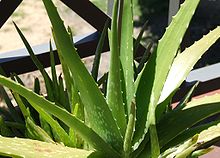
Description:
Aloe vera is a very short-stemmed plant, belonging to the family Asphodelaceae (Liliaceae). It is shrubby, arborescent, perennial, xerophytic, succulent, pea-green in color and can grow up to 100 cm tall. It has triangular, thick, fleshy, green to grey-green leaves, with some varieties showing white flecks on their upper and lower stem surfaces which have serrated edges. Each leaf has three layers, an inner clear gel that contains 99% water with other components like glucomannans, amino acids, lipids, sterols and vitamins; the middle layer of latex which is the bitter yellow sap that contains anthraquinones and glycosides; and the outer thick layer which provides a protective function and synthesizes carbohydrates and proteins. It has pendulous, yellow tubular flowers which are between 2 to 3cm long and has fruits that contain numerous seeds.
Cultivation/Propagation
- It is propagated by harvesting and replanting the plant’s offshoots (suckers) that grow beside the parent plant. The cuttings are also used to propagate the plant. It is often grown as an ornamental plant. It is relatively resistant to most insect pests, though spider mites, mealy bugs, scale insects, and aphid species may cause a decline in plant health.
Medicinal Benefits
- Possesses Anti-inflammatory; Antibacterial; Anti-fungal; Antiseptic; Germicidal; Anti-viral; Antiseptic; Antitumor; Moisturizing; Anti-allergy; Antioxidant; and anti-aging effect.
- Prevents and treats skin disorders like dandruff, psoriasis, seborrhea, minor burns, skin abrasions, skin injured by radiation, herpes sores, acne, and anal fissures.
- Treatment of Alopecia, bacterial and fungal skin infections, chronic leg wounds, parasitic infections, systemic lupus erythematosus, and arthritis.
- Improves hair growth by increasing blood circulation to the scalp and provides essential minerals and vitamins for hair growth.
- Used for the management of Seborrheic dermatitis; Psoriasis vulgaris; Genital herpes; and Skin burns.
- Used for treatment of Dental plaque; Oral thrush; Canker sores; and Diabetic foot ulcers.
- Used for management of Constipation; Digestive disorders, and Gastrointestinal ulcers.
- Used for management of Diabetes (type 2); HIV infection; and Ulcerative colitis.
- Repairs damaged skin and treats fungal infections of the skin.
- It conditions and improves hair and scalp health.
- Used as detoxifier and boosting of liver function.
- It improves skin and prevent wrinkles.
- It improves the cardiovascular system.
Other Benefits:
- Used as hormone for rooting cuttings for the propagation of plants through stems.
- Used to prevent early rotting of tomatoes and other fruit/vegetables.
How it is Used:
- Take orally for the management of overweight, diabetes, hepatitis, and inflammatory bowel disease (a group of conditions caused by gut inflammation that includes Crohn’s disease and ulcerative colitis).
- Apply gel topically to treat acne, lichen planus (a very itchy rash on the skin or in the mouth), oral submucous fibrosis, burning mouth syndrome, burns, and radiation-induced skin toxicity.
- The gel when taken diluted with water or in alcoholic decoction is used for the treatment of constipation and in the management of diabetes.
- To manage male impotence, the alcohol decoction of the roots is taken as half shot 2 to 3 times daily for at least ten days.
- To manage intestinal reflux disease, take 1 to 3 ounces of aloe gel at mealtime
- Use as mouth wash to treat oral thrush and oral ulcers.
Reported Side Effects/Caution:
- Oral use of aloe latex can cause abdominal pain/cramps, diarrhea, red urine, low blood sugar, and acute hepatitis. Laxative effect may cause electrolyte imbalances.
- Topical use of aloe gel is generally well tolerated; however, there have been occasional reports of burning, itching, and eczema with topical use of aloe gel.
- Overuse of aloe latex may increase the risk of adverse effects from the drug digoxin, used for some heart disease.
- It is contraindicated in cases of known allergy to plants in the Liliaceae family.
- It is not recommended during pregnancy and in breastfeeding mothers.
References:
- https://guardian.ng/saturday-magazine/gardening/aloe-vera-a-useful-house-plant-part-2/
- https://www.news-medical.net/health/Health-Benefits-and-Dangers-of-Aloe-Vera.aspx
- https://www.healthline.com/health/7-amazing-uses-aloe-vera#takeaway
- https://guardian.ng/saturday-magazine/aloe-vera-a-useful-house-plant/
- https://nigerianfinder.com/yoruba-herbs-english-names-uses/
- https://pharmeasy.in/blog/9-aloe-vera-benefits-for-face-skin/
- https://www.medicalnewstoday.com/articles/318591#risks
- https://www.webmd.com/diet/supplement-guide-aloe-vera
- https://www.nccih.nih.gov/health/aloe-vera