
Description
Cocos nucifera L., commonly known as the coconut palm, is a large, evergreen, monocotyledonous tree belonging to the Arecaceae (palm) family. It is often called the “tree of life” or “Kalpavriksha” due to its immense utility and the fact that almost every part of the plant is useful to humans.
The tree is a tall, slender, unbranched palm, typically growing to a height of 15-30 meters, with a trunk that is 20-35 cm in diameter. The trunk is smooth, gray to brown in color, and is marked by prominent, ring-like leaf scars. The base of the trunk is often swollen and may be surrounded by a cluster of small, adventitious roots.
The leaves are pinnately compound (feather-shaped), measuring 3-6 meters in length, and are borne at the top of the trunk in a terminal crown. Each leaf consists of 200-250 narrow, lanceolate, leathery leaflets, each 60-100 cm long and 3-4 cm wide.
The tree is monoecious, bearing both male and female flowers on the same inflorescence. The inflorescence is a large, branched panicle, up to 2 meters long, enclosed in a tough, boat-shaped, woody spathe (bract) that splits open when the flowers are mature. Male flowers are numerous, small, and yellowish, while female flowers are larger, rounder, and fewer in number, located near the base of the inflorescence branches.
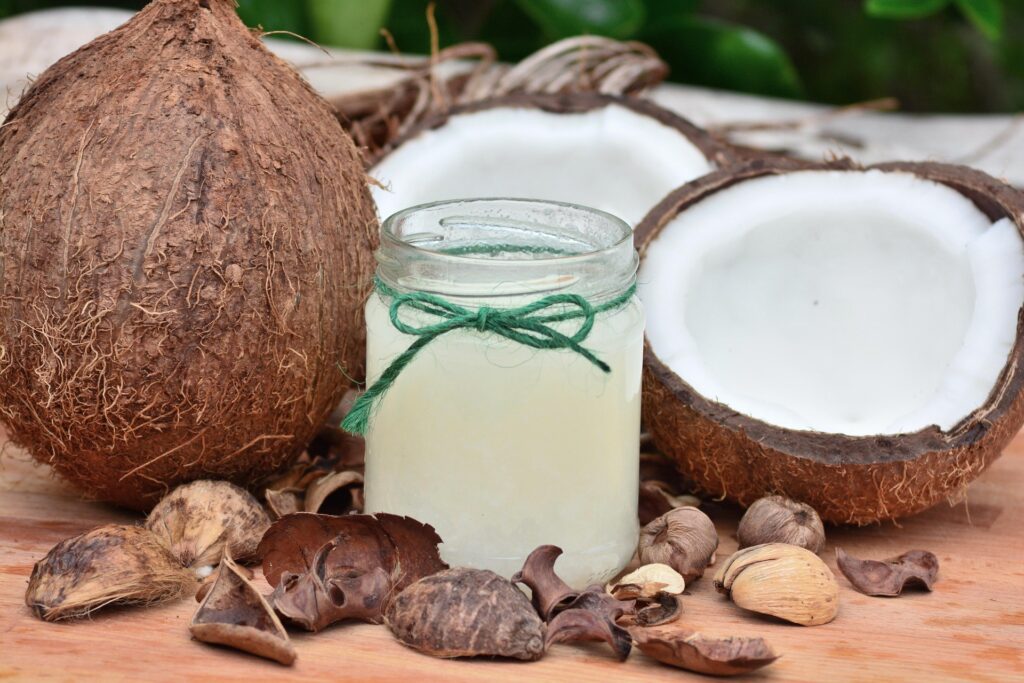
The fruit is a drupe (botanically a “fibrous drupe”), known as a coconut. It is large, oval to spherical, measuring 15-25 cm in length, and has three distinct layers:
- Exocarp (Epicarp): The thin, smooth, outer skin, which is green, brown, or yellow depending on maturity.
- Mesocarp (Husk/Coir): The thick, fibrous, middle layer, which is brown and spongy. This layer is the source of coir fiber.
- Endocarp (Shell): The hard, woody, inner layer with three prominent “eyes” (germination pores). One of these eyes is soft and allows the seedling to emerge.
Inside the endocarp is the endosperm, which initially is a liquid (coconut water) and later solidifies against the shell wall to form the white, fleshy kernel (coconut meat) . The mature kernel contains high levels of oil, which is extracted as coconut oil.
Common names
- Yoruba: Agbon, Agbo
- Igbo: Aki beke / Aku Oyibo / Aki Oyibo
- English: Coconut palm, Coconut
- Chinese: 椰子 (Yē zi), 可可椰子 (Kě kě yē zi)
- Hausa: Mosara
- French: Cocotier (palm), Noix de coco (fruit)
- Spanish: Coco, Cocotero, Palmera de coco
- German: Kokospalme, Kokosnuss
- Portuguese: Coqueiro, Coco da Bahia
- Italian: Palma del cocco, Noce di cocco
- Indonesian/Malay: Kelapa, Nyiur
Health Benefits
Coconut and its products (water, kernel, oil, husk) are valued in traditional medicine and have been studied for several pharmacological properties. It is rich in bioactive compounds, including flavonoids, tannins, phenols, and essential vitamins, which contribute to its wide range of pharmacological activities . Modern scientific studies have validated many of its traditional medicinal uses.
- Cardiovascular and Metabolic Health: The phytochemicals in coconut contribute to heart health by lowering blood pressure and improving lipid profiles . Studies have reported antihypertensive, cardioprotective, and vasodilation effects . Additionally, hypoglycemic (blood sugar-lowering) and antidiabetic properties have been demonstrated.
- Antimicrobial and Immune-Boosting: Coconut oil contains lauric acid, which has both antibacterial and immune-boosting properties. The kernel and water have demonstrated antibacterial, antifungal, antiviral, antiparasitic, and antidermatophytic effects. Studies have confirmed activity against various pathogens.
- Antioxidant and Anti-inflammatory: The plant exhibits potent antioxidant and anti-inflammatory activities, helping to combat oxidative stress and reduce inflammation. Antinociceptive (pain-relieving) effects have also been reported. Husk fibre extracts and coconut water help reduce oxidative stress and inflammation; traditionally used for arthritis and inflammatory conditions in parts of Nigeria and Brazil.
- Digestive and Hepatic Health: Coconut water is a natural source of electrolytes and is traditionally used for rehydration . Studies have reported anti-diarrheal, anti-helminthic (worm-expelling), and hepatoprotective (liver-protecting) effects.
- Hydration and electrolyte balance: Tender coconut water is rich in potassium, magnesium, and other minerals; it supports rehydration and may aid mild digestive issues like diarrhoea.
- Nutritional support: The kernel provides dietary fibre, healthy fats, vitamins, and microminerals; it may help with blood-sugar management due to its low glycaemic impact and fibre content.
- Skin and wound healing: Virgin coconut oil is moisturising, promotes wound healing, and has been used traditionally for skin conditions, ringworm, and hair/scalp health.
Modern research supports many traditional uses (antibacterial, antioxidant, hepatoprotective), but strong clinical evidence for some claims (e.g., major cholesterol reduction or diabetes cure) is still limited.
Other benefits
Beyond health and food, Cocos nucifera is called the “tree of life” because virtually every part is useful:
- Culinary Uses: The coconut kernel (meat) is consumed fresh or dried (copra). Coconut milk and cream are extracted from the grated kernel and used in curries, sauces, and sweets. Coconut oil is a common cooking fat. Coconut water is a popular refreshing beverage. The sap (toddy) from the inflorescence is fermented to produce palm wine or concentrated to make sugar (jaggery).
- Industrial and Household Products: Coconut oil is used in cosmetics, soaps, and as a biofuel. The fibrous husk (coir) is used to make ropes, doormats, carpets, brushes, and upholstery fillings. The hard shell is used to produce charcoal, activated carbon, barbecue briquettes, and decorative items. The wood (trunk) is used in construction and furniture making.
- Environmental and Agricultural Uses: Coir pith and fibers are used as a planting substrate (soil conditioner) in horticulture due to their excellent water retention properties. Coconut husk is also an effective, low-cost adsorbent for removing toxic metals like cadmium, lead, and mercury from wastewater (bioremediation). Coconut shell charcoal can also act as a corrosion inhibitor. : Roots stabilise soil; the palm grows on marginal coastal lands; husks and cake serve as animal feed.
- Nanobiotechnology: Recent research has explored the use of various parts of C. nucifera (e.g., tender coconut water) in the green synthesis of metal nanoparticles (e.g., silver, gold) for biological and medical applications.
- Other: Sap for palm sugar or toddy (local alcoholic drink); heart of palm (edible growing tip); biofuel potential from oil. It supports livelihoods for millions of smallholders in tropical countries, including Nigeria.
How it is used
- As Food and Beverage:
- Coconut Water: The liquid endosperm of young, green coconuts is drunk fresh as a refreshing, electrolyte-rich beverage.
- Coconut Kernel (Meat): The white flesh of mature coconuts is eaten raw, dried (copra), or grated to produce coconut milk and cream, which are used in various culinary preparations.
- Coconut Oil: Extracted from the dried kernel (copra), it is used as cooking oil, as well as in traditional medicine and cosmetics.
- Medicinal/traditional (including Nigerian use):
- Coconut water: drunk for hydration, diarrhoea, as a general tonic and as a diuretic.
- Coconut oil: applied topically for skin/hair conditions and as a base for massage oils or taken orally (1–2 tablespoons daily) for its antimicrobial and immune-boosting properties; virgin oil is preferred.
- Husk fibre: boiled into tea/decoction for arthritis, inflammation, or gastrointestinal issues (common in Nigerian and West African folk medicine).
- Decoctions: Decoctions or preparations from the root, husk, and leaves are used in traditional medicine for various ailments, including inflammation, pain, and parasitic infections.
- – Other Uses:
- Coir Fiber: Extracted from the husk, it is spun into yarn and woven into ropes, mats, brushes, and upholstery.
- Shell: Used as a fuel, to produce activated carbon, and carved into utensils and decorative items.
- Toddy (Sap): Tapped from the unopened inflorescence, it is consumed fresh as a sweet drink, fermented into palm wine, or boiled down to produce coconut sugar (jaggery).
Preparation examples: For oil, grate fresh kernel, mix with warm water, squeeze, and separate the cream, then heat or ferment to extract oil. Husk tea: boil dried husk fibre in water for 10–15 minutes and strain.
Side Effects/Caution
Cocos nucifera is generally recognized as safe for consumption and topical use for the majority of the population.
- Allergic Reactions: Although rare, allergic reactions to coconut have been described, particularly to coconut oil or coconut protein. Individuals with known tree nut allergies should exercise caution, though coconut is botanically a fruit, not a botanical nut. Symptoms may include skin rashes (contact dermatitis), hives, or, in severe cases, anaphylaxis.
- High Saturated Fat Content: Coconut oil and kernel are high in saturated fats. While the specific medium-chain triglycerides (MCTs) in coconut oil may have some health benefits, excessive consumption of saturated fat can raise LDL (“bad”) cholesterol levels in some individuals, potentially increasing the risk of cardiovascular disease. Moderation is advised.
- Weight Gain: Due to its high caloric density (especially the oil and dried kernel), excessive consumption of coconut products can contribute to unwanted weight gain.
- Topical Use: While coconut oil is generally well-tolerated by the skin, it can be comedogenic (pore-clogging) for some individuals, potentially leading to acne breakouts. A patch test is recommended before widespread application.
- Drug Interactions: There is limited evidence of significant drug interactions. However, due to its potential hypoglycemic and antihypertensive effects, individuals taking medications for diabetes or high blood pressure should monitor their levels when consuming large, medicinal amounts of coconut products and consult their healthcare provider.
- Coconut water: High in potassium; avoid large amounts if you have kidney disease or hyperkalaemia.
- Potassium Levels: Excessive intake of coconut water may lead to hyperkalemia in susceptible individuals (e.g., those with kidney disorders).
- Other: May affect blood sugar or blood pressure during/after surgery—stop medicinal use 2 weeks prior. Limited safety data for large medicinal doses in pregnancy/breastfeeding; stick to food amounts. Always consult a doctor before using medicinally if you have health conditions or take medications.
References
- “椰子.” 在线中国植物志, www.cn-flora.ac.cn:28080/plantonline/plantonlinesite/toDetailPage?plantId=0338a53d77af45cfa8cb4126211af2c2. Accessed 6 Apr. 2026.
- “Coconut Palm.” Missouri Botanical Garden, www.missouribotanicalgarden.org/plantfinder/PlantFinderDetails.aspx?taxonid=276638. Accessed 16 Apr. 2026.
- “Coconut.” Encyclopædia Britannica, 31 Mar. 2026, www.britannica.com/plant/coconut-palm. Accessed 16 Apr. 2026.
- DebMandal, M., and S. Mandal. “Coconut (Cocos nucifera L.: Arecaceae): In Health Promotion and Disease Prevention.” Asian Pacific Journal of Tropical Medicine, vol. 4, no. 3, 2011, pp. 241–247.
- FAO. Coconut Production and Uses. Food and Agriculture Organization of the United Nations, 2020.
- Ferguson, John. All About the “Coconut Palm” (Cocos Nucifera): Including Practical Instructions for Planting and Cultivation. 3rd ed., A.M. & J. Ferguson, 1904. HathiTrust, catalog.hathitrust.org/Record/100430020 .
- GlobinMed. “Cocos nucifera L.” GlobinMed, 22 July 2025, globinmed.com/medicinal_herbs/cocos-nucifera-l-r/.
- Infonet Biovision. “Coconut (Revised).” Infonet Biovision, 21 Dec. 2021, www.infonet-biovision.org/crops-fruits-vegetables/coconut-revised.
- Lima, E. B. C., et al. “Coconut (Cocos nucifera L.) Water: A Review of Its Nutritional, Functional, and Medicinal Properties.” International Journal of Food Sciences and Nutrition, vol. 66, no. 6, 2015, pp. 567–577.
- Lima, Everton B., et al. “Cocos nucifera (L.) (Arecaceae): A phytochemical and pharmacological review.” Brazilian Journal of Medical and Biological Research, vol. 48, no. 11, 2015, pp. 953-959. OmicsDI, www.omicsdi.org/dataset/biostudies-literature/S-EPMC4671521.
- Mgbeahuruike, E. E., et al. “Medicinal and Nutritional Values of Coconut in Tropical Regions.” Journal of Medicinal Plants Research, 2017.
- Roopan, Selvaraj Mohana, et al. “Exploitation of Cocos nucifera a non-food toward the biological and nanobiotechnology field.” Industrial Crops and Products, vol. 67, May 2015, pp. 130-136. ScienceDirect, www.sciencedirect.com/science/article/abs/pii/S0926669015000102 .
- Silva, R. R., et al. “Anti-Inflammatory, Antioxidant, and Antimicrobial Activities of the Husk Fiber Extract of Cocos nucifera.” Evidence-Based Complementary and Alternative Medicine, vol. 2013, Article ID 296439.
- U.S. Department of Agriculture (USDA). “Coconut, Raw.” FoodData Central, 2019.
- WebMD. “Coconut – Uses, Side Effects, and More.” WebMD, www.webmd.com/vitamins/ai/ingredientmono-1492/coconut. Accessed 16 Apr. 2026.
- Yuktha, S. K., and Karunakar Hegde. “The Science of Cocos Nucifera: Insights into Its Nutritional and Medicinal Applications.” International Journal of Pharmaceutical Sciences, vol. 3, no. 3, Mar. 2025, pp. 261-270. Zenodo, doi:10.5281/zenodo.14976269 .
Zimpfer, R. “Coconut Palm.” Altmeyers Encyclopedia – Department Phytotherapy, 28 Oct. 2020, www.altmeyers.org/en/naturopathy/coconut-palm-143270