
Names:
- General: Lemon grass, Fever grass
- Hausa: Tsauri
- Ibibio: Myoyaka makara
- Igbo: Achara
- Yoruba: Kooko oba
Description:
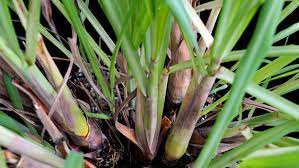
Lemongrass is a Perennial, tufted, aromatic grass with numerous erect culms arising from a short, oblique, ring-shaped, sparingly branched rhizome that belongs to the family Poaceae and grown often for its fragrant leaves and stalks which are used as a flavoring. It grows in dense clumps and has several stiff stems that can grow up to 3m and slender blade-like leaves which droop towards the tips. The leaves are blue-green in color, turning red in the dry season. It produces large compound flowers on spikes. It can grow for several years.
Cultivation/Propagation
- It can be easily propagated by dividing the stalks from the rhizome of a well-established plant and planting in full sun or partial shade. The bulb can be divided prior to planting by slicing through the rhizome with a sharp spade or trowel while ensuring that each new plant has its own rootstock.
Medicinal Benefits
- Lemongrass is consumed for the treatment of Anxiety; Common cold; Cough; Diabetes; Epilepsy; Fever; Hypertension; Musculoskeletal pain; Rheumatism; Sleeplessness; Post Menstrual Syndrome; Chronic indigestion; Stomach ache/intestinal spasm; and prevention of Cancer.
- Antioxidant; Antimicrobial; Anti-inflammatory; Anti-cancer; Diuretic; Antihypertensive; Anti-cholesterol; Antifungal; Antiemetic; Anticonvulsant; Analgesic; Antipyretic; Antiseptic; Astringent; and Antidiabetic.
- Used for the management of Asthma; Diabetes; High cholesterol; Low back pain; Bladder disorders; Diarrhea; Vomiting; Rheumatism; Tendons; Circulatory problems; Insomnia; and Sprain.
- Anti-allergic; Antibacterial; Abortifacient; Antispasmodic; Carminative; Antiparasitic; Diaphoretic; Expectorant; Sedative; Tonic; Detoxifier; and Teratogenic.
- Lowers cholesterol; Prevents infection; Boost oral health; Relieves pain; Boosts red blood cell level; and Relieves bloating.
- Used for the treatment of Ringworm; Fungal infections including candida and yeast; Scabies;
- Promote weight loss; boosts energy; enhances breast milk production;
Other Benefits:
- In Hoodoo, lemongrass is the primary ingredient of an oil used in conjuration. It is also used in preparations to protect against evil; spiritually clean a house; and to invite good luck.
- In food and beverages, lemongrass is used as a flavoring. For example, lemongrass leaves are commonly used as “lemon” flavoring in herbal teas.
- Lemongrass oil imitates the pheromone emitted by a honeybee’s Nasonov gland and as such it is used to attract bees to a hive or a swarm.
- In manufacturing, lemongrass is used as a fragrance in soaps and cosmetics. Lemongrass is also used in making vitamin A and natural citral.
How it is used:
- The tea can be made by cutting 1 or 2 stalks into bits and steeped in boiling water and strained into a teacup after about 5 minutes. Adding ice will make a cold lemongrass tea. The tea is used for the following:
- Management of high blood pressure, convulsions, achy joints (rheumatism), fever, the common cold, and exhaustion. It is also used to kill germs and as a mild astringent.
- Treatment of fever, digestive tract spasms, intestinal worms, cramps, vomiting leprosy, upset stomach, indigestion, and gastric ulcers.
- Treatment of oral thrush in immune compromised persons (like in HIV/AIDS) when taken for 10 days.
- Treatment of cough, cold, asthma, and other respiratory conditions.
- When used medicinally, lemongrass may be taken by mouth (as tea, aromatic drink, and food), rubbed on the skin, or inhaled as an aromatherapy treatment.
- When applied to the skin, lemongrass or lemongrass oil is used to treat a headache; abdominal pain; and musculoskeletal pain.
- Lemongrass oil extract may be inhaled to treat muscle pain, infections, colds, or flu symptoms as part of aromatherapy.
- Applied topically for the treatment of inflammatory skin conditions and elimination of dandruff.
- The oil or the grass is rubbed for the treatment of ringworms; gout; arthritis; and sprain.
Reported Side Effects/Caution:
- It is considered safe for cooking but when consumed in huge amount it is capable of causing side effects like Dry mouth; Tiredness; Dizziness; Frequent urination; Increased appetite; and Allergic reactions like rash and itching.
- Persons undergoing chemotherapy should avoid lemongrass because it may interfere with the actions of some chemotherapeutic agents.
- Pregnant women should avoid taking lemongrass by mouth as it might cause miscarriage.
- When used topically, it may cause skin irritation.
References:
- https://guardian.ng/features/lemon-grass-induces-childbirth/#:~:text=Commonly%20called%20lemongrass%2C%20Cymbopogon%20citratus,ehi%20and%20Yoruba%2C%20kooko%20oba.
- https://www.verywellfit.com/lemongrass-benefits-side-effects-and-preparations-4178847
- https://pharmeasy.in/blog/ayurveda-uses-benefits-side-effects-of-lemongrass/
- https://www.healthline.com/health/food-nutrition/lemongrass-tea#pms
- https://uses.plantnet-project.org/en/Cymbopogon_citratus_(PROSEA)
- https://www.planetayurveda.com/lemongrass-cymbopogon-citratus/
- https://www.medicalnewstoday.com/articles/321969#takeaway
- https://www.rxlist.com/lemongrass/supplements.htm
- https://en.wikipedia.org/wiki/Cymbopogon#Species
- https://plantvillage.psu.edu/topics/lemon-grass/infos