
Description
Eleusine indica, commonly known as goosegrass, is an annual or short-lived perennial grass belonging to the Poaceae family, native to Africa and Asia. It is one of the most widespread and common weeds in the world. The plant typically forms a low-growing, flattened, or slightly upright tufted clump. Its most recognizable feature is its distinctive flowering head, which consists of 2-7 (usually 5) spike-like branches that spread out like fingers at the top of the stem, resembling a “zipper” or a goose’s foot. The stems (culms) are flattened, often whitish at the base, and can root at the lower nodes. The leaves are flat, linear, and have a rough texture on both surfaces. The leaf sheath is also flattened and can be hairy. It is a highly adaptable and resilient plant, known for its resistance to herbicides and its ability to thrive in compacted, disturbed soils in full sun, performing C4 photosynthesis for efficient growth in hot climates, and reproduces solely by seeds, which can germinate year-round in warm, moist conditions.
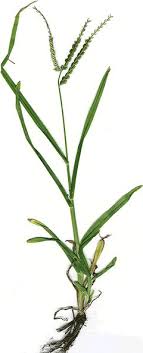
Common Names
- English: Goosegrass, Wiregrass, Crow’s-foot, Yard-grass, Indian Goosegrass.
- Yoruba: Èfìdán, Èfímẹ̀fà (Efimefa), Koriko ojiji, Ewé èké okùnrin
- Igbo: Ọwa (Owa), Ahihia, Ijite
- Hausa: Ciyawa (general term for grass), Tumatir daji, túújíí, Ciyawar kura
- Edo: Ebavo
Health Benefits
Despite being considered a nuisance weed, Eleusine indica has a significant history of use in traditional medicine systems, including in Nigeria. It has been utilized in traditional medicine across Africa, Asia, and South America, with scientific studies validating several pharmacological properties:
- Antipyretic (Fever Reduction): It is commonly used as a remedy for fevers, including those associated with malaria and typhoid. A decoction of the whole plant is drunk to induce sweating and reduce body temperature.
- Antimicrobial: Extracts have demonstrated activity against various bacteria and fungi, supporting its use for treating infections. Hexane extracts show activity against Gram-positive (e.g., MRSA, Bacillus subtilis) and Gram-negative bacteria (e.g., E. coli).
- Antidiabetic Potential: Some scientific studies have investigated its potential to lower blood sugar levels, supporting its traditional use for managing diabetes. Hexane extracts inhibit pancreatic lipase, reduce blood glucose, and improve lipid profiles (lowering TC, TG, LDL; increasing HDL) in high-fat diet models.
- Antioxidant and Detoxifier: Rich in flavonoids, phenols, and phenolic glycosides, extracts scavenge free radicals (DPPH assay), reduce lipid peroxidation, and protect against oxidative stress in liver and kidney models. In some traditions, it is used as a general blood purifier and detoxifier.
- Analgesic (Pain Relief): Used to alleviate pain, including headaches, stomach aches, and rheumatic pains. Ethanolic root extracts provide pain relief in acetic acid-induced models, comparable to ibuprofen.
- Anti-inflammatory: Leaf extracts inhibit inflammation in edema models and reduce pro-inflammatory cytokines like TNF-α. It is also used to reduce inflammation, both internally and topically.
- Diuretic Properties: The plant promotes the production and excretion of urine. This makes it useful for treating urinary tract infections (UTIs), kidney stones, and edema (fluid retention).
- Hepatoprotective: Aqueous extracts ameliorate CCl4-induced liver damage, normalizing ALT/AST levels and enhancing antioxidant defenses.
- Cognitive Enhancement: Methanolic extracts reverse scopolamine-induced memory deficits, increasing acetylcholinesterase and dopamine levels.
- Anticancer/Cytotoxic: Induces apoptosis in cancer cell lines (e.g., lung, colon) via hyperacetylation.
- Antidiarrheal: A decoction is used to treat diarrhea and dysentery.
- Other: Anti-helminthic, used for asthma, pulmonary disorders, dysentery, hypertension, and wounds.
Other Benefits
Eleusine indica offers ecological, agricultural, and industrial value despite its weedy nature:
- Fodder: While not a primary forage crop, it is readily eaten by livestock, including cattle, goats, and sheep, especially when young and tender. When cultivated, productive fodder yields up to 30 t/ha fresh matter, palatable when young; used for grazing, hay, or silage.
- Soil Conservation: Its dense, mat-forming growth habit can help prevent soil erosion on disturbed lands.
- Cultural Uses: In some cultures, the tough stems are used to make temporary ropes, mats, or brooms. In some other communities, it is incorporated into cleansing rituals and protective charms.
- Industrial: Fibers from stems for weaving baskets, trays, cordage, hats, and paper; cellulose extracted for composites.
- Famine Food: Seeds are edible (ground into flour or cooked) and nutritious during scarcity.
- Indicator Plant: Its presence often indicates compacted, poor-quality soil.
How It is Used
The whole plant, including the roots, is used for medicinal purposes.
- Decoction and Infusion (Tea):
- The most common method. The fresh or dried plant is thoroughly boiled in water. The resulting liquid is strained and drunk for fevers, urinary problems, and diabetes, or used as a bath for reducing fever.
- Decoctions (boiled with water) or aqueous extracts (100–300 mg/kg) orally as diuretic, febrifuge, or for hypertension, oliguria, and liver/kidney ailments.
- The root ash rubbed into scarifications for pain or tachycardia.
- The plant is steeped in hot water to make a tea for less severe conditions.
- Poultice: The fresh plant is crushed and applied directly to wounds, boils, sprains, or inflamed joints to reduce pain and swelling and prevent infection.
- Juice: The fresh plant is pounded and the expressed juice is taken orally for quick action against fevers, pains and urinary problems.
- Seeds: Ground into flour for porridge or bread as famine food; occasionally brewed into beer.
- Hexane Extracts: Modern use is for hypolipidemic and lipase inhibition in supplements.
Preparations include infusions, decoctions, pastes, or oils; often combined with other herbs. - Herbal combinations: Sometimes mixed with other plants like Azadirachta indica (neem) or Carica papaya for malaria treatment.
Side Effects / Caution
Eleusine indica is generally safe, with acute oral toxicity studies showing LD50 >5000 mg/kg (low hazard, GHS Category 5); no mortality or significant changes in subchronic trials up to 2000 mg/kg. While traditionally used, it is important to be aware of potential risks.
- Pesticide Contamination: As a common lawn and agricultural weed, it is often sprayed with herbicides. Plants harvested from such areas may contain toxic residues and should be avoided.
- Oxalate Content: The plant contains calcium oxalate, which in very large quantities can contribute to kidney stone formation in susceptible individuals.
- Dosage: There is no standardized safe dosage. Excessive consumption may lead to stomach upset or other adverse effects due to its potent diuretic and medicinal properties.
- Pregnancy and Lactation: Due to a lack of safety data, it is advisable for pregnant and breastfeeding women to avoid medicinal use.
- Drug Interactions: Its diuretic effect may interact with prescription diuretics, potentially leading to dehydration or electrolyte imbalance. Its blood sugar-lowering potential could also interact with diabetes medication.
- Allergic reactions: May cause skin irritation in sensitive individuals.
Always consult a qualified healthcare provider before using any plant for medicinal purposes, especially if you have pre-existing health conditions or are taking other medications.
References
- “Eleusine indica.” Useful Tropical Plants Database, Ken Fern, tropical.theferns.info/viewtropical.php?id=Eleusine+indica. Accessed 16 Sept. 2025.
- “Eleusine indica.” Wikipedia, Wikimedia Foundation, 7 Mar. 2024, en.wikipedia.org/wiki/Eleusine_indica. Accessed 16 Sept. 2025.
- Adoho, Akouavi Carine Chimene, et al. “Review of the Literature of Eleusine indica: Phytochemical, Toxicity, Pharmacological and Zootechnical Studies.” Journal of Pharmacognosy and Phytochemistry, vol. 10, no. 3, 2021, pp. 198-206.
- Afolayan, A. J., and F. O. Jimoh. “Nutritional Quality of Some Wild Leafy Vegetables in South Africa.” International Journal of Food Sciences and Nutrition, vol. 60, no. 5, 2009, pp. 424-31.
- Al-Zubairi, A. S., et al. “Eleucine indica Possesses Antioxidant, Antibacterial and Cytotoxic Properties.” Evidence-Based Complementary and Alternative Medicine, vol. 2011, 2011, pp. 1-7.
- Burkill, H. M. “The Useful Plants of West Tropical Africa. Vol. 2, Royal Botanic Gardens, Kew, 1994.
- Burkill, H. M. The Useful Plants of West Tropical Africa. 2nd ed., vol. 4, Royal Botanic Gardens, Kew, 1985.
- Ettebong, Ette O., et al. “A Systematic Review on Eleucine indica (L.) Gaertn.): From Ethnomedicinal Uses to Pharmacological Activities.” Journal of Medicinal Plants Studies, vol. 8, no. 4, 2020, pp. 114-122.
- Idu, M., and O. O. Olorunfemi. “Ethnobotanical Study of Plants Use for Fertility in Edo and Delta States of Nigeria.” Plant Archives, vol. 8, no. 2, 2008, pp. 589-92.
- Iqbal, M., and C. Gnanaraj. “Eleusine indica L Possesses Antioxidant Activity and Precludes Carbon Tetrachloride (CCl4)-Mediated Oxidative Hepatic Damage in Rats.” Environmental Health and Preventive Medicine, vol. 17, no. 4, 2012, pp. 307-315.
- Iwu, M. M. Handbook of African Medicinal Plants. 2nd ed., CRC Press, 2014.
- Odugbemi, T., and O. Akinlove. Outlines and Pictures of Medicinal Plants from Nigeria. University of Lagos Press, 2008.
- Ogie-Odia, E. A., and F. A. Oluowo. “Assessment of Some Medicinal Plants in Flora of South-Southern Nigeria with Antidiabetic Properties.” African Journal of Biotechnology, vol. 8, no. 12, 2009, pp. 2839-43.
- Okoli, R. I., et al. “Medicinal plants used for managing some common ailments among Esan people of Edo State, Nigeria.” Pakistan Journal of Nutrition, vol. 6, no. 5, 2007, pp. 490–496.
- Sagnia, B., et al. “Antioxidant and Anti-Inflammatory Activities of Extracts from Cassia alata, Eleusine indica, Eremomastax speciosa, Carica papaya and Polyscias fulva Medicinal Plants Collected in Cameroon.” Journal of Ethnopharmacology, vol. 155, no. 2, 2014, pp. 852-859.
- Sodipo, O. A., et al. “Phytochemical Screening and Antimicrobial Activity of Crude Extracts of Eleusine indica.” Journal of Chemical and Pharmaceutical Research, vol. 7, no. 5, 2015, pp. 1-6.
- Sofowora, A. Medicinal Plants and Traditional Medicine in Africa. Spectrum Books, 1993.
- Usman, H., and F. I. Abdulrahman. “Phytochemical Screening and Diuretic Activity of Eleusine indica in Rats.” Nigerian Journal of Pharmaceutical Sciences, vol. 8, no. 1, 2009, pp. 66-72.
- Zakri, Z. H. M., et al. “Eleusine Indica for Food and Medicine.” Journal of Agrobiotechnology, vol. 12, no. 2, 2021, pp. 68-87.