
Description
Myrianthus arboreus P. Beauv., commonly known as the giant yellow mulberry or monkey fruit, is a dioecious tropical tree in the family Urticaceae (or Cecropiaceae in some classifications). The generic name Myrianthus refers to the great number of flowers borne on the inflorescences, while the specific epithet arboreus means “tree-like”.
Morphology: The tree typically grows up to 10–15 meters (30–65 feet) in height, occasionally reaching 20 meters, with a short trunk that divides into a spreading crown of spreading branches. It often develops stilt roots at the base of the trunk for support in damp environments. The bark is smooth and greyish-green.
Leaves: The leaves are the most distinctive feature of this plant. They are very large, palmate (hand-shaped), and 5–7-fid to -parted down to the petiole, reaching up to 90 cm × 90 cm in overall size . The leaflets are sessile or with short petiolules, lanceolate to oblanceolate in shape, measuring up to 63 cm long and 22 cm wide . The margins are coarsely and irregularly crenate- to serrate-dentate. The upper surface is hairy (hirtellous to puberulous) on the main veins, while the lower surface is whitish-hairy. Young leaves are typically red in colour. The petiole (leaf stalk) is long, measuring 25–55 cm, and is whitish-hairy. The stipules are large (3–5 cm long), caducous (falling off early), and covered with whitish to pale yellow hairs.
Flowers: The tree is dioecious, meaning male and female flowers are borne on separate trees
- Male inflorescences are large, much-branched, panicle-like structures measuring 5–30 cm in diameter, with a peduncle (stalk) of 13–21 cm. The flowers are yellow and arranged in small, spike-like glomerules (clusters).
- Female inflorescences are globose (spherical) heads measuring 2–3.5 cm in diameter, containing 20–50 flowers, with a peduncle of 2–6 cm. Each flower has a thick, curled style projecting out of the fused calyx.
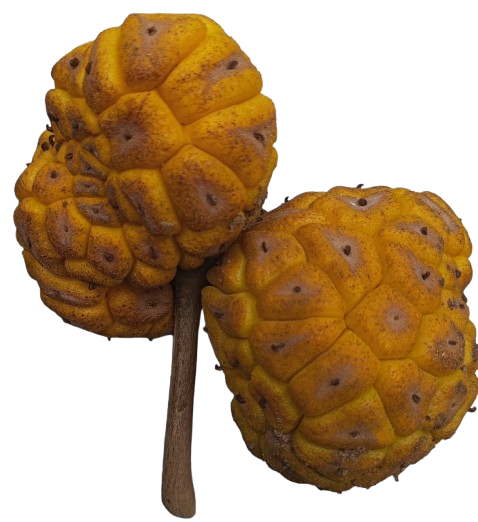
Fruit: The fruit is a large, fleshy, yellow syncarp (a cluster of fused drupes) that measures 6–10 (sometimes up to 15) cm in diameter. When ripe, it turns bright yellow and has stylar remains projecting from each drupe, giving it a spiky appearance. Each fruit contains numerous (20–80) seeds, each surrounded by a sweet, edible pulp. The endocarp (inner hard layer) surrounding each seed measures approximately 1.6 × 0.7 cm.
Distribution and Habitat: Myrianthus arboreus is native to tropical Africa, ranging from West Africa (including Nigeria, Côte d’Ivoire, Sierra Leone) through Central Africa (Cameroon, Gabon, Democratic Republic of Congo, Angola) to East Africa (Kenya, Tanzania, Uganda) . It is also found in Sudan and Ethiopia. The tree typically grows in rainforest, swamp forest, riverine areas, lakesides, and forest regrowth, at altitudes of 700–1200 meters. It thrives in damp, humid environments and is often found in clearings and secondary forests.
Conservation Status: The species is assessed as Least Concern (LC) on the IUCN Red List, indicating it is not currently threatened with extinction.
Common Names
- English: Giant yellow mulberry, Monkey fruit, Corkwood, Bush pineapple, Soup tree
- French: Grand wounian, Arbre à pain indigène
- Portuguese: Pernambuco
- Yoruba: Igbesi, Ibisere
- Igbo: Ujuju
- Hausa: Unknown (specific name not recorded)
- Efik/Ibibio: Ndisok
- Cameroon (Bassa): Kogom
- Edo/Delta region: Ihieghie (frequently used as a popular indigenous vegetable in Edo and Delta states)
Health Benefits
Myrianthus arboreus has been extensively studied for its pharmacological properties, with research validating many of its traditional uses in African ethnomedicine. The plant has demonstrated significant therapeutic potential across multiple health conditions.
- Uterine Fibroid (Leiomyoma) Management (Highly Significant Recent Discovery): A landmark 2025 study published in Reproduction and Fertility investigated the anti-uterine leiomyoma (fibroid) effects of the stem bark decoction of M. arboreus in a rat model. Uterine fibroids are non-cancerous tumors of the uterus affecting up to 80% of women by age 50, with black women disproportionately affected.
Key findings from Mvondo et al. (2025):
The aqueous extract of M. arboreus stem bark (50, 100, and 200 mg/kg) administered for 30 days produced remarkable effects:
- Reduced uterine abnormalities: The extract reduced uterine horn asymmetry and thickening, relative uterine weight and diameter, and myometrial (uterine muscle) thickness.
- Reduced fibrosis: Collagen density in the uterus was decreased at 100 and 200 mg/kg.
- Anti-inflammatory effects: The extract reduced uterine levels of inflammatory cytokines including TGF-β1, VEGF, and TNF-α . TGF-β1 is involved in fibrosis, VEGF in blood vessel formation (angiogenesis), and TNF-α in chronic inflammation—all key processes in fibroid growth.
- Hormonal regulation: Serum estradiol levels were decreased at 100 and 200 mg/kg, addressing the hormonal drivers of fibroid growth.
- Antioxidant effects: The extract reduced oxidative damage by decreasing malondialdehyde (MDA) levels at 50 mg/kg and increasing catalase activity at all tested doses.
Conclusion: By attenuating key cellular events involved in fibroid growth—inflammation, fibrosis, and angiogenesis—Myrianthus arboreus may be a promising option for uterine fibroid treatment and management.
- Female Reproductive Health and Infertility Treatment: M. arboreus has been traditionally used in Cameroon to treat female infertility and amenorrhea (absence of menstruation), and scientific studies have validated these uses.
PCOS-Related Infertility: A 2020 study investigated the effects of the aqueous leaf extract on letrozole-induced polycystic ovary syndrome (PCOS) in rats. PCOS affects 6–10% of reproductive-age women and is a leading cause of infertility.
Key findings:
- The extract reversed PCOS effects by decreasing body weight, abdominal fat accumulation, and serum levels of LH and testosterone.
- Ovarian dynamics improved: the number of tertiary and Graafian follicles (healthy developing follicles) and corpus luteum increased, while cystic and atretic (degenerating) follicles decreased.
- Serum estradiol levels increased.
- Ovarian oxidative stress was reduced.
- The estrous cycle resumed, and uterine epithelial cells showed hypertrophy (healthy growth).
- Fertility index and gestation rate increased.
General Fertility Enhancement: A safety evaluation study (2016) also noted that the aqueous leaf extract at 200 mg/kg significantly increased ovarian and uterine wet weights, red blood cell count, hematocrit, and hemoglobin in female rats, indicating improved reproductive organ health and blood status.
- Pain Relief (Analgesic Properties): In southeastern Nigeria, the leaves are traditionally used as an analgesic for muscular pains and as an enema to relieve pain in the back and loins. A 2015 study published in the Journal of Ethnopharmacology validated this use.
Key findings from Tijani et al. (2015):
- The extract produced a significant dose-dependent inhibition of abdominal writhing (83.72% at 40 mg/kg) induced by acetic acid, comparable to aspirin (84.49%).
- In the formalin paw licking test (which measures both neurogenic and inflammatory pain), the extract significantly inhibited both phases of pain.
- In thermal pain models (hot plate and tail immersion tests), the extract prolonged latency and reaction time, indicating central analgesic activity possibly mediated via opioid receptors.
The study concluded that M. arboreus possesses potent antinociceptive (pain-relieving) activity mediated both peripherally and centrally, justifying its traditional use in pain management.
- Antioxidant Properties: Multiple studies have confirmed the antioxidant properties of M. arboreus extracts. The plant contains various bioactive compounds including flavonoids, tannins, and phenolic compounds that neutralize free radicals and reduce oxidative stress. This antioxidant activity contributes to its anti-inflammatory, anti-fibrotic, and reproductive health benefits.
- Anti-inflammatory Effects: The plant has demonstrated significant anti-inflammatory properties in several studies. The reduction of inflammatory cytokines (TNF-α, TGF-β1) in the uterine fibroid study confirms its ability to modulate inflammation at the molecular level. This supports its traditional use for various inflammatory conditions.
- Anti-diabetic Potential: M. arboreus is traditionally used to treat diabetes in Africa, and scientific studies have supported this application. The root bark extracts have shown anti-diabetic potential in vitro. The plant’s ability to improve insulin sensitivity and reduce blood glucose levels makes it a potential alternative for diabetes management.
- Cardiovascular Benefits (Cholesterol Reduction): The 2016 safety evaluation study noted that the aqueous leaf extract decreased triglycerides, total cholesterol/HDL ratio, and atherogenic index of plasma in both sexes at all tested doses . These effects suggest potential cardiovascular protective properties, including reduced risk of atherosclerosis and heart disease.
- Antimicrobial and Antiparasitic Properties: Research has documented various antimicrobial effects:
- Antibacterial activity: The leaves have shown good antibacterial activity.
- Antiplasmodial (antimalarial) effects: Bark extracts have demonstrated antiplasmodial activity in vitro.
- Antimycobacterial and antitrypanosomal effects: The bark has shown activity against mycobacteria and trypanosomes.
- Termite deterrent: Extracts deter the termite Reticulitermes lucifugus.
- Hepatoprotective (Liver-Protective) Effects: The 2016 safety study noted that alanine transaminase (ALT), a liver enzyme marker, decreased in both sexes at 200 mg/kg of the extract, suggesting potential liver-protective effects.
- Hematological (Blood) Benefits: The same study reported significant increases in red blood cell count, hematocrit, mean corpuscular hemoglobin, and hemoglobin in females at 200 mg/kg . This suggests potential benefits for anemia prevention and overall blood health.
- Renal (Kidney) Benefits: Serum creatinine levels decreased at all tested doses in females in the safety study, indicating potential kidney-protective effects.
- Gastrointestinal and Respiratory Relief: Leaf and root sap contains compounds that reduce symptoms of diarrhea, dysentery, and vomiting. When applied or drank, the liquid treats chest complaints, including bronchitis, laryngitis, and persistent coughs.
- Antitumor Properties: Research has reported anti-tumoral properties of M. arboreus extracts against various benign and malignant diseases. The presence of compounds such as euscaphic acid, tormentic acid, epicatechin, and epigallocatechin, which have known anti-tumoral activities, supports this application.
Summary of Bioactive Compounds
Phytochemical investigations have identified several bioactive compounds in M. arboreus:
| Compound | Plant Part | Known Activity |
| β-sitosterol | Leaves | Anti-fibrotic |
| Isocaryophyllene | Leaves | Anti-inflammatory |
| Methyl palmitate | Leaves | Anti-fibrotic |
| Epicatechin | Stem bark | Antioxidant, anti-tumoral |
| Epigallocatechin | Stem bark | Antioxidant, anti-tumoral |
| Euscaphic acid | Stem bark | Anti-tumoral |
| Tormentic acid | Stem bark | Anti-tumoral |
| Myrianthic acid | Bark | Bioactive triterpenoid |
| Ursolic acid | Wood/roots | Anti-inflammatory, anti-tumoral |
| Myrianthiphyllin | Wood | Lignan cinnamate |
Data from multiple sources
Other benefits
– Edible fruit: The sweet pulp surrounding the seeds is edible and highly sought after. The ripe fruit has a pineapple-like, acidulous (slightly sour) flavor and is consumed fresh . The fruit can reach up to 10-15 cm across and is often called “bush pineapple”.
– Edible leaves (Soup vegetable): The young leaves are eaten as a vegetable and are used to make a popular soup in Nigeria, giving the tree its common name “soup tree”.
– Timber and wood uses: The wood is light yellow, relatively light, and harder than that of the parasolier tree (Musanga cecropioides) . It can be used for general purposes, though it is not widely employed commercially.
– Soil improvement and nitrogen fixation: The leaf litter of M. arboreus improves soil fertility. The tree also has the ability to improve nitrogen levels due to its mycorrhizal associations.
– Agroforestry applications: The tree can be planted in damp or swampy soils and is suitable for reforestation and erosion control in wet tropical areas.
– Pest control (Natural termite deterrent): Extracts of M. arboreus have been shown to deter the termite Reticulitermes lucifugus, suggesting potential as a natural pest control agent.
– Cultural significance: In some regions, the aerial roots, when cut, produce a sap that is consumed as a drink.
– Research significance: The plant serves as a valuable subject for pharmacological research, particularly in the areas of women’s reproductive health, fibroid treatment, and diabetes management.
– Traditional medicine resource: The leaves, fruit, bark, and sap are all used in traditional medicine across West, Central, and East Africa for treating various ailments.
How it is used
Culinary uses:
Soup Vegetable (Nigeria and West Africa):
- The young leaves are harvested, washed, and added to soups as a leafy green vegetable. This is the most common culinary use in Nigeria, giving the tree its name “soup tree”.
- The leaves are typically boiled in water or added to meat/fish stocks. Traditional preparation involves prolonged cooking to soften the leaves and reduce any potential bitterness.
Fresh Fruit:
- The ripe yellow fruits are eaten fresh. The sweet, pineapple-like pulp surrounding each seed is consumed, while the seeds themselves are typically discarded.
- The fruit can also be processed into juice or added to fruit salads.
Young Leaves as Vegetable:
- In addition to soup use, young leaves can be boiled and eaten as a spinach-like side dish, often served with starchy staples.
Traditional medicinal uses:
For Uterine Fibroids (Emerging Application):
- Based on recent research (2025), the stem bark decoction (boiled in water) is consumed to reduce fibroid growth and associated symptoms.
- The decoction is prepared by boiling the stem bark in water and drinking the resulting liquid.
For Female Infertility and PCOS (Cameroon and Nigeria):
- The leaf aqueous extract is used to treat primary and secondary infertility, amenorrhea (absence of menstruation), and to improve lactation.
- Preparation: Leaves are boiled in water, and the decoction is consumed daily. In the scientific study, doses of 20, 110, and 200 mg/kg were effective.
For Pain Relief (Muscular Pain, Back Pain, Loin Pain – Southeastern Nigeria):
- Leaves are used as an analgesic for muscular pains.
- Leaves are also used as an enema to relieve pain in the back and loins.
- The leaf extract can be applied topically or taken orally.
For Boils and Skin Infections:
- The leaf or leaf-petiole is beaten into a plaster and applied to boils.
- Sap from young leaves or terminal buds is applied topically to toothache, to the chest for bronchitis, or to the throat for laryngitis/sore throat.
For Diarrhea and Dysentery:
- Bark infusions are administered for dysentery and diarrhea.
For Vapour Baths:
- Diced roots are sometimes boiled alongside melegueta pepper to create an herbal steam bath meant to alleviate severe headaches.
For Diabetes Management:
- A bark decoction is administered for diabetes.
- Root bark extracts have shown anti-diabetic potential in vitro.
For Headaches and Swellings:
- The plant is used to treat headaches and various swellings.
For Heart Troubles and Fever:
- Decoctions of leaves, roots, and bark are used for heart troubles and fever.
For Respiratory diseases:
- Splitting the aerial roots or crushing terminal buds yields a liquid sap that can be drunk directly as a cough suppressant or painted inside the throat to treat laryngitis.
Preparation methods summary:
| Condition | Plant Part Used | Preparation Method |
| Uterine fibroids | Stem bark | Decoction (boiled in water) |
| Infertility/PCOS | Leaves | Aqueous extract (boiled in water) |
| Pain (muscular/back) | Leaves | Oral extract or enema |
| Boils | Leaves/leaf-petiole | Beaten into plaster (topical) |
| Toothache | Sap from young leaves | Applied topically |
| Diarrhea/dysentery | Bark | Infusion |
| Diabetes | Bark/root bark | Decoction |
| Headaches/swellings | Various parts | Decoction |
Side Effects / Caution
- General Safety Profile (Favorable): Multiple toxicity studies have demonstrated that Myrianthus arboreus has a favorable safety profile when used appropriately.
Acute Toxicity:
- LD50 > 5000 mg/kg in rats (aqueous leaf extract), indicating very low acute toxicity.
- LD50 = 894 mg/kg in mice (ethanol extract of leaves), indicating moderate acute toxicity at high doses.
Sub-acute Toxicity (28-day study):
- The aqueous leaf extract at doses of 20, 110, and 200 mg/kg/day for 28 days showed no mortality or major signs of toxicity.
- However, at the highest dose (200 mg/kg), some effects were observed:
- In males: Decreased white blood cell count, lymphocytes, and relative weight of seminal vesicles and ventral prostate (accessory sex organs).
- In females: No significant adverse effects on reproductive organs; instead, beneficial effects (increased ovarian/uterine weights, improved blood parameters) were observed.
- Potential Effects on Male Reproductive Health: The 2016 safety study noted that at the highest tested dose (200 mg/kg) in males, the extract decreased:
- White blood cell count
- Lymphocyte count
- Relative weight of seminal vesicles and ventral prostate
These findings suggest that high doses may affect male reproductive organs and immune cells . Caution is advised for men taking high doses over extended periods.
- Pregnancy and Lactation:
- No specific safety data is available for use during pregnancy and breastfeeding.
- Given the plant’s potent hormonal effects (e.g., decreasing estradiol, affecting LH and testosterone levels), medicinal use during pregnancy should be avoided unless under professional supervision.
- While lower doses of leaf extracts are proven to boost fertility indices, laboratory studies indicate that exceptionally high doses can conversely reduce overall gestational success and impair pregnancy progression. Pregnant women should avoid unstandardized, high-concentration doses of the extracts.
- Drug Interactions: Given the plant’s diverse pharmacological effects, potential drug interactions include:
- Hormonal medications: The plant affects estradiol, LH, and testosterone levels and may interact with hormonal contraceptives, hormone replacement therapy, or fertility medications.
- Antidiabetic medications: The plant’s anti-diabetic properties may have additive effects with insulin or oral hypoglycemic agents, potentially causing hypoglycemia.
- Antihypertensive medications: The plant’s cardiovascular effects (cholesterol reduction) may interact with blood pressure medications.
- Anticoagulant/Antiplatelet drugs: The plant’s anti-inflammatory effects could theoretically interact with blood-thinning medications.
- Correct Plant Identification: Ensure the plant is correctly identified as Myrianthus arboreus P. Beauv. before use. The tree has a distinctive appearance with its large, palmate leaves and stilt roots, but misidentification with other species could lead to adverse effects.
- Proper Preparation Methods:
- Traditional preparation (decoction/boiling) should be followed, as this method likely reduces any potentially toxic compounds while preserving beneficial ones.
- Avoid consuming raw leaves or unprocessed plant parts.
- Moderation: As with any herbal medicine, moderation is essential. The sub-acute toxicity study indicated that the highest dose (200 mg/kg) produced some adverse effects in males, suggesting that very high doses over long periods should be avoided.
- Allergic Reactions: As with any plant, rare allergic reactions are possible. Individuals with known plant allergies should exercise caution when using M. arboreus for the first time.
- Emeto-Purgative Risks: When the whole fruit is boiled in the tree’s raw sap, palm wine, or heavy ferments, it acts as a powerful emeto-purgative (inducing violent vomiting and purging of the bowels). This practice should only be approached with extreme caution, as it can cause rapid dehydration.
- Limited Data for Specific Conditions: While research supports the use of M. arboreus for uterine fibroids, PCOS, infertility, and pain, further clinical studies in humans are needed to confirm efficacy and establish optimal dosing regimens.
References
- “Giant Yellow Mulberry, Myrianthus arboreus.” Daleys Fruit Tree Nursery, www.daleysfruit.com.au/Giant-Yellow-Mulberry-Myrianthus-arboreus.htm. Accessed 16 May 2026.
- “Myrianthus arboreus (PROTA).” Pl@ntUse, plantuse.plantnet.org/en/Myrianthus_arboreus_(PROTA). Accessed 16 May 2026.
- “Myrianthus arboreus P.Beauv.” Plants of the World Online, Royal Botanic Gardens Kew, powo.science.kew.org/taxon/urn:lsid:ipni.org:names:854739-1. Accessed 16 May 2026.
- “Myrianthus arboreus.” Mindat.org, www.mindat.org/taxon-4013416.html. Accessed 16 May 2026.
- “Myrianthus arboreus.” PROTA4U Plant Database, Plant Resources of Tropical Africa, prota.prota4u.org/protav8.asp?g=pe&p=Myrianthus+arboreus. Accessed 16 May 2026.
- “Safety Evaluation (Acute and Sub-Acute Studies) of the Aqueous Extract of the Leaves of Myrianthus arboreus P. Beauv. (Cecropiaceae) in Wistar Rats.” INFONA, 2016, www.infona.pl/resource/bwmeta1.element.elsevier-33d56e0b-337b-3c3e-8bf3-d78a790598bf.
- “Myrianthus arboreus P.Beauv.” *PROTA4U*, Plant Resources of Tropical Africa, prota.prota4u.org. Accessed [current date].
- “Myrianthus arboreus.” *Wikipedia*, Wikimedia Foundation, en.wikipedia.org/wiki/Myrianthus_arboreus. Accessed [current date].
- “Myrianthus arboreus.” Plant Resources of Tropical Africa (PROTA). (prota.prota4u.org)
- Awodi, Patience Ilecholubo, et al. “Phytochemical Constituents and Antioxidant Properties of Aqueous Leaf Extract of Myrianthus arboreus.” International Journal of Biomedical Science and Engineering, vol. 5, no. 1, 2017.
- Awounfack, Charline Florence, et al. “Myrianthus arboreus P. Beauv (Cecropiaceae) Extracts Accelerates Sexual Maturation, and Increases Fertility Index and Gestational Rate in Female Wistar Rats.” BMC Complementary and Alternative Medicine, vol. 18, no. 1, 2018, pp. 255-264.
- Awounfack, Charline Florence, et al. “Myrianthus arboreus P. Beauv (Cecropiaceae) Extracts Accelerates Sexual Maturation, and Increases Fertility Index and Gestational Rate in Female Wistar Rats.” *BMC Complementary and Alternative Medicine*, 2018. (PMC).
- Harley, Benjamin Kingsley, et al. “Flavanols and Triterpenoids from Myrianthus arboreus Ameliorate Hyperglycaemia in Streptozotocin-Induced Diabetic Rats…” *Biomedicine & Pharmacotherapy*, vol. 132, 2020.
- Bobyua, Pascal N., et al. “Ethnobotanical Value of Myrianthus arboreus Used in Traditional Medicine by the Ngbaka Tribe.” Budapest International Research in Exact Sciences Journal, 2024.
- Demaze Diffo, Nidele, et al. “Evaluation of the Effects of Myrianthus Arboreus P. Beauv (Cecropiaceae) and Eremomastax Speciosa (Hochst.) Cufod (Acanthaceae) Leaf Extracts on Acetic Acid-Induced Pain in Swiss Strain Mice, Two Plants Used in the Treatment of Dysmenorrhoea in Manjo (Littoral-Cameroon).” International Journal of Advanced Research in Chemical Science, vol. 12, no. 1, 2025, pp. 1-11.
- García-Pérez, Martha-Estrella, et al. Bioactive Molecules from Myrianthus arboreus, Acer rubrum, and Picea mariana Forest Resources. Molecules, 2023.
- Mvondo, M. A., et al. “The Leaf Aqueous Extract of Myrianthus arboreus P. Beauv. (Cecropiaceae) Improved Letrozole-Induced Polycystic Ovarian Syndrome Associated Conditions and Infertility in Female Wistar Rats.” BMC Complementary Medicine and Therapies, vol. 20, 2020, p. 275. PubMed Central, doi:10.1186/s12906-020-03070-8.
- Mvondo, M. A., et al. “The Stem Bark Decoction of Myrianthus arboreus P. Beauv. (Cecropiaceae) Shows Anti-Uterine Leiomyoma Effects in Wistar Rat.” Reproduction and Fertility, vol. 6, no. 3, 2025, p. e250037. PubMed Central, doi:10.1530/RAF-25-0037.
- Mvondo, Marie Alfrede, et al. “The Leaf Aqueous Extract of Myrianthus arboreus Improved Letrozole-Induced Polycystic Ovarian Syndrome Associated Conditions and Infertility in Female Wistar Rats.” BMC Complementary Medicine and Therapies, vol. 20, 2020.
- Ntube, Neola Etame Ekaney, et al. “Evaluation of Chemical Composition, Physicochemical and Anti-nutritional Properties of Giant Yellow Mulberry Fruit (Myrianthus arboreus).” European Journal of Nutrition & Food Safety, vol. 16, no. 5, 2024, pp. 48-65.
- Ojinnaka, Chukwunonye M., and Lennart Kenne. “Studies on Nigerian Medicinal Plants: Components of the Stems of Myrianthus arboreus.” Journal of Natural Products, vol. 48, no. 6, 1985, pp. 1002–1003.
- Okafor, J. C. “Myrianthus arboreus P. Beauv.” Agroforestree Database, World Agroforestry (ICRAF), apps.worldagroforestry.org/treedb2/speciesprofile.php/AFTPDFS/docs/AFTPDFS?Spid=17938. Accessed 16 May 2026.
- Olonode, E. T., et al. (and related studies on analgesic/antianxiety effects). *Nigerian Journal of Pure and Applied Sciences*, 2025 (or relevant publication).
- Tijani, A. Y., et al. “Anti-Nociceptive Activity of the Crude Extract of Myrianthus arboreus P. Beauv (Cecropiaceae) in Mice.” Journal of Ethnopharmacology, vol. 171, 2015, pp. 94-98. ScienceDirect, doi:10.1016/j.jep.2015.05.019.