
Description
Solanum aethiopicum L., commonly known as Ethiopian eggplant, African eggplant, scarlet eggplant, bitter tomato, or garden egg, is a flowering plant species in the nightshade family Solanaceae (the same family as tomato, potato, and common eggplant) . It is an annual or perennial herb or shrub that typically grows 0.3–1 meter (1–3 feet) tall, and is unarmed (without prickles) .
Morphology: The plant has erect, often branching stems that can be glabrous (smooth) or moderately covered with stellate (star-shaped) hairs. The leaves are arranged alternately, measuring 5–18 cm long and 2.5–10 cm wide. They are ovate to elliptic in shape, with margins that may be subentire (smooth) or weakly lobed (with up to 3 lobes on each side). The leaf blades often dry to a characteristic dark red-brown or almost black color.
Flowers: The inflorescences are lateral, unbranched, bearing 1–2 (sometimes up to 10) flowers. The flowers are perfect (bisexual) and 5-merous (sometimes up to 10-merous in cultivated forms). The corolla is white, star-shaped, measuring 0.8–1.8 cm in diameter.
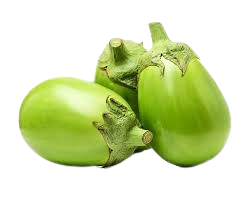
Fruit: The fruit is a berry that may be spherical, ovoid, or variously shaped depending on the cultivar. When immature, fruits are often green with pale green or cream markings (often striped). At maturity, they turn bright yellow, orange, or red. The diameter ranges from 1.5–2.5 cm in wild types to up to 5 cm in cultivated varieties. Each fruit contains 20–100 flattened, reniform (kidney-shaped) seeds, 2.1–3.5 mm long.
Native to tropical Africa (with possible domestication links to Asia), it is widely cultivated across West, East, and Central Africa, including Nigeria. It is a hardy, drought-tolerant crop well-adapted to tropical climates and is valued for both its edible fruits and leaves.
Groups/Cultivars: S. aethiopicum is highly diverse and has been classified into four cultivar groups based on usage:
- Gilo Group: Grown primarily for its fruits, which are eaten raw or cooked. This group is common in Brazil.
- Shum Group: Grown for its leaves, which are consumed as a leafy green vegetable similar to spinach. This group is common in Africa.
- Kumba Group: Grown for both its edible leaves and its sweet, broad, deeply-grooved fruits.
- Aculeatum Group: Grown for ornamental purposes and for its rhizomes; this group may have prickles and is not common in Africa.
Common Names
- English: Ethiopian eggplant, African eggplant, scarlet eggplant, bitter tomato, mock tomato, garden egg
- French: Aubergine africaine, Aubergine amère, Jilo
- Yoruba: Igba (for the fruit); the leaves are called Ewe Igba
- Igbo: Anara (for the fruit)
- Hausa: Gautan kaji (sometimes used; Yalo may refer to similar species)
- Efik/Ibibio: Ntuek (or similar variants)
- Ethiopia: Bamiya (ባሚያ)
- India (Manipur): Khamen akhaba
- India (Mizoram): Samṭawk
- Nepal/Sikkim/Darjeeling: Titay bii or Bii
- Dutch: Ethiopische aubergine
Health Benefits
Solanum aethiopicum is nutrient-dense and low in calories. It provides dietary fiber, carbohydrates, proteins, vitamins (A, C, B vitamins including folate), and minerals (potassium, magnesium, iron, calcium, manganese). The fruits and leaves contain bioactive compounds such as flavonoids, polyphenols, alkaloids (e.g., solasodine), saponins, and antioxidants like chlorogenic acid and anthocyanins. It is considered a nutraceutical (a food with medicinal value) and has been extensively studied for its pharmacological properties. It is one of the five most important vegetable crops in sub-Saharan Africa.
- Nutritional Composition: Both the fruits and leaves are highly nutritious, containing the three major macronutrients (carbohydrates, proteins, and fats), dietary fiber, and essential vitamins.
Nutritional content (per 100g):
| Component | Fruits | Leaves |
| Moisture | 89.27% | 84.43% |
| Carbohydrates | 4.14 g | 4.26 g |
| Protein | 2.24 g | 6.92 g |
| Fat | 0.52 g | 0.79 g |
| Crude Fiber | 2.96 g | 1.82 g |
Data from Chinedu et al. (analysis of Nigerian Mile 12 market samples)
Mineral content (mg/100g):
| Mineral | Fruits | Leaves |
| Potassium (K) | 3582 mg | 3064 mg |
| Calcium (Ca) | 126 mg | 1048 mg |
| Magnesium (Mg) | 187 mg | 666 mg |
| Phosphorus (P) | 29 mg | 327 mg |
| Iron (Fe) | 21 mg | 12 mg |
Data from Yaméogo et al.
- Anti-Anemic Properties (Blood Health): Studies have demonstrated that the aqueous leaf extract of S. aethiopicum can significantly increase packed cell volume (PCV), hemoglobin (Hb), and red blood cell (RBC) counts . In traditional medicine, the leaves are used as an anti-anemic tonic. The iron content (especially high in leaves) is known to help prevent anemia.
- Antioxidant Effects: The plant contains various phytochemicals (phenols, flavonoids, alkaloids) that exhibit potent antioxidant properties, neutralizing free radicals and reducing oxidative stress.
- Anti-Inflammatory Properties: S. aethiopicum has demonstrated anti-inflammatory effects, supporting its traditional use for treating swollen joint pain, asthma, allergic diseases, and other inflammatory conditions.
- Antidiabetic Effects: The low soluble carbohydrate content and high fiber content of S. aethiopicum reduce the body’s absorption of glucose, thereby helping to lower blood sugar levels. It has shown potential as an anti-diabetic agent .
- Anti-Obesity and Weight Management: The fruit is rich in dietary fiber and low in calories. Consuming it promotes satiety (feeling of fullness), reduces the frequency of food cravings, and may contribute to body fat reduction .
- Antibacterial Properties: Research has confirmed the antibacterial activity of S. aethiopicum extracts against various pathogens .
- Digestive Health: The high dietary fiber content helps maintain a healthy digestive system by relieving constipation and abdominal bloating. In traditional medicine, it is used to treat constipation and dyspepsia .
- Organ Protection (Hepato- and Reno-Protective): Studies have shown that S. aethiopicum leaf extract can reduce elevated liver enzymes (AST, ALT, ALP) and kidney function markers (urea, creatinine), indicating protective effects on the liver and kidneys.
- Cardiovascular Health (Lipid Profile): Research suggests that S. aethiopicum may have anti-hyperlipidemic properties, helping to improve lipid profiles and reduce the risk of cardiovascular disease .
Other benefits
- Ceremonial/Cultural Use (Nigeria): Among the Igbo people of Nigeria, the garden egg fruit is used as a substitute for kola nut, particularly for individuals who do not wish to chew kola nut. It is used to welcome guests or before the resumption of traditional ceremonies .
- Culinary Versatility: The fruit is sometimes used to make a tomato-based sauce that is eaten with yam in Nigeria and is a key ingredient in various stews and soups across West Africa.
- Ornamental Use: In some parts of Asia and Europe, S. aethiopicum is grown as an ornamental plant due to its attractive brightly colored fruits.
- Industrial/Pharmaceutical Source: Several Solanum species, including S. aethiopicum, are rich sources of precursors for steroid drugs, particularly diosgenin and solasodine. The leaves of the Shum group are known to contain significant levels of saponins (which contribute to bitterness) – Livelihood and Food Security: As one of the five most important crops in sub-Saharan Africa, S. aethiopicum contributes significantly to food security and rural livelihoods. It produces roughly 25 tons of harvest per hectare, making it a reliable crop.
- Post-Harvest Research: The fruit has a short shelf life of about 3–4 days, making it a subject of research into post-harvest handling practices, including ripening stage, harvesting methods, packaging, and storage conditions.
How it is used
Culinary uses:
- Fresh (Raw): The fruits (garden eggs) are commonly eaten raw in Nigeria, often as a snack with groundnut (peanut) or as part of a salad. The bitterness is balanced by the creaminess of the groundnut.
- Soups and Stews (Nigeria): The fruits are sliced and added to soups, stews, and sauces. A common preparation is a tomato-based sauce made with garden eggs, eaten with boiled yam or plantain.
- Leafy Vegetable (Shum Group): The leaves are boiled or steamed and eaten as a spinach-like vegetable. They are used in soups, stews, and yam porridge. The leaves are usually boiled to reduce bitterness.
- Other Preparations: In other regions (e.g., Northeast India), the fruits are eaten both raw and cooked, often with meat (especially pork).
Traditional medicinal uses:
- For Anemia: A decoction of the leaves is consumed as a tonic to boost blood levels. In a 2019 rat study, aqueous leaf extract at 400 mg/kg body weight showed significant anti-anemic effects.
- For Constipation and Digestive Issues: The high-fiber fruits are eaten raw to relieve constipation, abdominal bloating, and dyspepsia.
- For Weight Management: The fiber-rich, low-calorie fruits are incorporated into the diet to promote satiety and aid weight loss.
- For Inflammation and Joint Pain: Leaf extracts or poultices may be used to treat swollen joints, asthma, and allergic conditions.
- For Diabetes Management: The fruits are eaten regularly to help lower blood sugar levels.
- For Cardiovascular Health: Regular consumption of fruits and leaves may help manage lipid profiles.
- Application: The leaves are boiled to make an infusion, while fruits are typically consumed fresh. Dried plant parts may be used in powdered form:
- Fruits: Eaten for digestive issues, blood pressure, diabetes support, and general nutrition.
- Leaves: Decoctions or juice for sedative effects, uterine complaints, fever, or skin issues.
- Roots/Bark: Decoctions for colic, high blood pressure, or infections.
- Whole Plant: Various parts used in traditional remedies for cholera, bronchitis, wounds, and as an anti-ulcer agent.
Side Effects / Caution
Solanum aethiopicum is generally safe when consumed as a food vegetable in normal amounts, as it has been used for generations in African diets.
1. Bitterness and Saponins: The bitterness of S. aethiopicum (especially in leaves and some fruit varieties) is due to saponin content. While generally safe, consuming excessively bitter specimens or very large quantities may cause digestive discomfort.
2. Safety Profile: Acute toxicity studies have demonstrated a wide margin of safety. In a study where rats were given up to 5000 mg/kg of aqueous leaf extract, no signs of toxicity or death were recorded. This lends credence to its traditional use as a safe vegetable and herbal medicine.
3. Glycoalkaloid Content: S. aethiopicum contains significantly lower or negligible levels of toxic glycoalkaloids (α-solamargine and α-solasonine) compared to Solanum macrocarpon, which is unsafe to eat. In contrast, S. melongena (common eggplant) and S. aethiopicum are edible.
4. Short Shelf Life: The fresh fruit has a very short shelf life (3–4 days) and must be consumed quickly or properly stored to prevent spoilage.
5. Pregnancy and Lactation: While generally considered safe, there is limited specific data on high-dose medicinal use during pregnancy and breastfeeding. Normal dietary consumption is likely safe.
6. Drug Interactions: Given its potential to lower blood sugar and cholesterol, individuals on diabetes or cholesterol-lowering medications should monitor their levels if consuming large medicinal quantities.
7. Allergic Reactions: As a member of the Solanaceae family, it contains solanine and other alkaloids that may cause sensitivity in some people (e.g., joint pain, digestive upset, or inflammation in susceptible individuals) rare allergic reactions in individuals sensitive to other nightshades (e.g., tomato, eggplant, potato).
8. Moderation: As with any food, excessive consumption may cause gastrointestinal issues such as bloating or diarrhea due to high fiber content.
References
“Solanum aethiopicum L.” Plants of the World Online, Royal Botanic Gardens Kew, powo.science.kew.org/taxon/urn:lsid:ipni.org:names:818158-1. Accessed 5 May 2026.
“Solanum aethiopicum.” Wikipedia, Nederlandse Wikipedia, nl.wikipedia.org/wiki/Solanum_aethiopicum. Accessed 5 May 2026. [Cited for cultural uses]
“Garden Egg (Solanum aethiopicum) as a Mystical Plant in Akabo, South Eastern Nigeria: Health and Economic Implications.” ResearchGate, 2023.
“Solanum aethiopicum.” Wikipedia, https://en.wikipedia.org/wiki/Solanum_aethiopicum. Accessed 5 May 2026.
Chinedu, S. N., et al. “Proximate Analysis of Solanum aethiopicum Fruits and Leaves from Mile 12 Market, Lagos, Nigeria.” Journal of Applied Biosciences, vol. 45, 2011, pp. 3063–3069. [Cited in 1]
Choi, S. M., et al. “Nutritional Composition, Phytochemical Profiles, and Pharmacological Properties of Solanum aethiopicum.” PMC, 2024, https://pmc.ncbi.nlm.nih.gov/articles/PMC11644213/. Accessed 5 May 2026.
Choi, Seung Min, and Chang-Ik Choi. “Nutritional Composition, Phytochemical Profiles, and Pharmacological Effects of Ethiopian Eggplant (Solanum aethiopicum L.).” Nutrients, vol. 16, no. 23, 2024, p. 4228. PubMed Central, doi:10.3390/nu16234228.
Food and Agriculture Organization. Traditional Food Plants. FAO, 1988.
Gbile, Z. O., and S. K. Adesina. “Nigerian Solanum Species of Economic Importance.” Annals of the Missouri Botanical Garden, vol. 75, no. 3, 1988, p. 862. doi:10.2307/2399374.
Grubben, G. J. H., and O. A. Denton, editors. Plant Resources of Tropical Africa 2: Vegetables. PROTA Foundation, 2004.
Han, M., et al. “Solanum aethiopicum: The Nutrient-Rich Vegetable Crop with Diverse Medicinal Properties.” Horticulturae, vol. 7, no. 6, 2021, https://www.mdpi.com/2311-7524/7/6/126. Accessed 5 May 2026.
Ikpeazu, O. V., et al. “Ameliorative Effect of Aqueous Leaf Extract of Solanum aethiopicum on Phenylhydrazine-Induced Anaemia and Toxicity in Rats.” Toxicology and Environmental Health Sciences, vol. 36, no. 3, 2019, pp. 227–238. PubMed Central, doi:10.1007/s43188-019-00021-5.
Lester, R. N., and Daunay, M. C. “Diversity of African Vegetable Solanum Species.” Acta Horticulturae, vol. 745, 2007, pp. 25–31.
Schippers, R. R. African Indigenous Vegetables: An Overview of the Cultivated Species. Natural Resources Institute, 2000.
World Health Organization. WHO Monographs on Selected Medicinal Plants. WHO Press, 1999.
Yaméogo, C. W., et al. “Mineral Composition of Solanum aethiopicum Fruits and Leaves from Burkina Faso.” International Journal of Biological and Chemical Sciences, vol. 12, no. 5, 2018, pp. 2154–2165. [Cited in 1]