
Description
Pentaclethra macrophylla Benth. is a perennial leguminous tree belonging to the Fabaceae (pea/legume) family . It is commonly known as the African oil bean tree and is native to tropical Africa (including Nigeria), ranging from Senegal eastward to Sudan and southward to Angola, including the islands of São Tomé and Príncipe.
The tree is medium-sized to large, typically reaching heights of 20-40 meters, with a girth of up to 6 meters. It has a characteristic low-branching habit and an open crown that allows substantial light to penetrate, making it compatible with intercropping. The trunk is often gnarled, twisted, and may have irregular, thick buttress roots reaching up to 3 meters high. The bark is grayish to reddish-brown, thin, and peels off in irregular scales, while the inner bark is fibrous and yellow to orange in color.
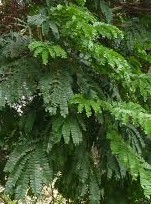
The leaves are alternate, bipinnately compound, measuring 20-45 cm in length, with 9-13 pairs of opposite pinnae, each bearing 8-14 pairs of opposite leaflets. The leaflets are oblong to elliptical, measuring 1.2-2.5 cm long and 5-10 mm wide, with a rounded apex and unequal base.
The inflorescence is a terminal or axillary panicle reaching up to 30 cm in length, consisting of spiciform spikes bearing numerous small, fragrant, pale yellow flowers. The flowers are bisexual, regular, and 5-merous, with 5 stamens and 10-15 staminodes. The main flowering period in West Africa is March to April.
The fruit is a dark brown to blackish, woody pod, obliquely linear-oblong in shape, reaching up to 50 cm in length, 10 cm in width, and 2 cm in thickness. The pods contain 5-10 flattened seeds, each measuring 3.5-7 cm long and 2.5-3.5 cm wide, with smooth, purplish-brown testa (seed coat). The pods persist on the tree for a long time and open explosively, then curve backward.
It is a multipurpose tree valued for soil improvement (nitrogen fixation) and fast growth. The seeds are rich in protein (around 22–44%), oil (30–52%, with oleic and linoleic acids), essential amino acids, minerals, and phytochemicals like alkaloids, flavonoids, saponins, tannins, and phenols.
Common Names
Pentaclethra macrophylla is known by numerous common names across its range:
- English: African oil bean tree, Oilbean tree, Atta bean, Owala oil tree, Congo acacia, Nganzi, Wild locust
- Igbo: Ugba (the fermented seed product shares this name), Ukpaka, Ukpaghana, Ukana
- Yoruba: Apara, Apawa, Ataa
- Efik/Ibibio: Ukana, Okpagha, Ukpakara
- Urhobo: Ebal
- Cameroon: Mubala, Mbalaka, Kombolo, Ebé, Bemba
- Gabon: Ovala, Ebé
- Congo: Essiri, Kommott
- French: Arbre à semelles, Acacia du Congo, Owala
- Portuguese: Sucupira, Marroné
Health Benefits
Pentaclethra macrophylla possesses numerous scientifically supported health benefits, attributed to its rich content of bioactive compounds including fatty acids, phenolics, and other phytochemicals .
- Polycystic Ovary Syndrome (PCOS) Management: Recent research published in 2024 demonstrated that Pentaclethra macrophylla leaf extract has significant ameliorative effects in letrozole-induced PCOS in rats. The extract effectively restored hormonal balance, enhanced follicular development, and normalized the expression of critical genes including P53, insulin receptor substrate (IRS), fat mass and obesity-associated (FTO), and CYP11a genes in PCOS rats. These findings indicate potential for P. macrophylla as an effective PCOS therapy strategy.
- Diabetes and Erectile Dysfunction Management: A 2024 study investigated the phenolic composition of P. macrophylla leaves and their effects on type 2 diabetes-induced erectile dysfunction in rats. The study identified several bioactive phenolic compounds including gallic acid, chlorogenic acid, ellagic acid, kaempferol, and epicatechin. Dietary supplementation with P. macrophylla leaves resulted in:
- Significant reduction in blood glucose levels
- Inhibition of arginase and phosphodiesterase-5 (PDE5) activities
- Enhanced nitric oxide levels
- Improved erectile function
These results suggest that P. macrophylla leaves could serve as a potent nutraceutical source for managing hyperglycemia-induced erectile dysfunction.
- Cardiovascular and Cholesterol Management: Studies have reported that consumption of fermented P. macrophylla seeds (Ugba) helps in lowering plasma cholesterol and reducing the risks of ulcer . Research on the aqueous extract of fermented seeds demonstrated dose-dependent increases in HDL-C (“good cholesterol”) levels.
- Antioxidant Activity: Fermented Pentaclethra macrophylla seed extract (FPMSE) has demonstrated dose-dependent percentage inhibition in DPPH antioxidant assays, indicating significant free radical scavenging activity. GC-MS analysis revealed fourteen fatty acids in the extract, including omega-6 fatty acid (9,12-Octadecadienoic acid, methyl ester).
- Analgesic and Wound Healing Properties: The seeds, leaves, stem bark, and fruit pulp extracts have been reported to possess anti-inflammatory, analgesic (pain-relieving), and wound-healing properties . A decoction of the bark is used as a lotion for washing sores and psoriatic lesions.
- Anti-helminthic Properties: The various plant parts have demonstrated anti-helminthic (anti-parasitic/anti-worm) activities, supporting traditional use for treating parasitic infections.
- Antisickling: Polyphenols and other metabolites exhibit activity against sickle cell disease.
- Anti-ulcerogenic and Digestive Aid: Traditionally used for diarrhea and ulcer management; fermented form may support gut health as a probiotic-like food.
- Traditional Medicinal Uses: The plant is widely used in African traditional medicine for various ailments:
- Bark decoction: Used as a laxative, enema for dysentery, and liniment against itching
- Leaf and stem decoctions: Taken against diarrhea
- Root bark: Used as a laxative
- Infusions (Cameroon): Used as abortifacient
- Crushed seeds: Taken in cases of abortion
- Leaf extracts: Used for diarrhea-related ailments in parts of Nigeria
- Other: Anti-cancer supportive (preliminary), fertility enhancement, and general tonic effects.
Fermentation significantly improves nutritional value and reduces anti-nutrients.
Other Benefits
- Culinary and Nutritional Applications: The seeds of Pentaclethra macrophylla are highly valued as a food source. The fermented seed product, known as Ugba among the Igbo of Nigeria, is a popular delicacy with a meaty taste, served as a snack, flavoring agent and used as a protein-rich condiment in Nigerian dishes like Abacha (African salad), soups, Nkwobi, and yam porridge. The seeds are also consumed boiled or roasted. The nutritional composition of P. macrophylla seeds includes :
- Fats and oil: 32-80% (depending on processing)
- Protein: 10-17%
- Carbohydrates: 16-40%
- The oil is rich in oleic acid (19-29%), linoleic acid (42-54%), and longer-chain fatty acids including behenic, lignoceric, hexacosanoic, and octacosanoic acids
- Edible Oil Production (“Owala Butter”): Oil extracted from the seeds is used to make “owala butter,” an ingredient used in making candles, lubricants, and ointments in Central Africa .
- Wood and Timber Uses: The wood of P. macrophylla, known as “mubala” or “ovala,” is :
- Hard, heavy (density ~910 kg/m³ at 12% moisture)
- Reddish-brown heartwood
- Used for firewood, charcoal production
- Used for making posts, railway sleepers, pestles, and mortars
- Occasionally used in joinery
- Agricultural and Environmental Benefits:
- Nitrogen fixation: The tree forms root nodules and fixes atmospheric nitrogen, improving soil fertility
- Leaf litter: Fallen leaves serve as manure and contribute to soil fertility
- Companion planting: The open crown allows substantial light, making it suitable for intercropping without inhibiting crop growth
- Erosion control: The tree is useful for erosion control in humid zones
- Other Uses:
- Fuel: Empty, dry pods serve as cooking fuel
- Dye mordant: Ashes from burning wood or pods are used as mordant in dyeing
- Honey production: Bees forage on the nectar-rich flowers
- Edible caterpillars: Caterpillars of Nudaurelia oyemensis and Imbrasia obscura feed on the leaves and are consumed as food in D.R. Congo
- Ornamental: Sometimes planted along roads as an ornamental tree
- Traditional ceremonies: The tree plays a role in various traditional ceremonies
- Economic: Cash crop for smallholder farmers.
How it is Used
As Food: Seeds are boiled (often for hours), dehulled, sliced, washed, and fermented (3+ days with Bacillus spp.) to produce Ugba. Eaten alone, in salads, soups, or with palm oil and other ingredients. Can also be used unfermented or as flour.
- Fermented Seeds (Ugba): The seeds undergo proteolytic fermentation (naturally occurring, primarily by Bacillus species) under alkaline conditions. The resulting product is used as:
- A condiment in soups and salads
- A standalone snack
- A soup flavoring agent in Nigerian cuisine
- Boiled or Roasted Seeds: Seeds are consumed boiled or roasted throughout the West African forest zone
- Edible Oil: Oil extracted from seeds is used for cooking and as “owala butter”
As Medicine (Traditional)
- Bark decoction: Prepared by boiling stem bark in water; used as lotion for sores and wounds, administered as enema for dysentery, or taken orally as laxative
- Leaf extract: Used for treating diarrhea-related ailments; also used externally for wound healing
- Seeds (fermented/raw processed): For diabetes, cholesterol, ulcers, and as a protein source.
- Root bark: Used as a laxative
- Infusion (Cameroon): Bark infusions used as abortifacient
- Crushed seeds: Taken for abortion-related conditions
As Timber and Fuel
- Wood is used for firewood, charcoal making, and heavy construction including railway sleepers and poles
- Empty pods serve as cooking fuel
As Agricultural Aid
- Planted or preserved on farms and home gardens for its soil-improving properties and compatible canopy
Fermentation and thorough cooking are essential to reduce bitterness and anti-nutritional factors (e.g., paucine alkaloid).
Side Effects/Caution
- Generally Safe for Consumption, but with Important Precautions: The fermented seed product Ugba has been consumed for generations without established cases of acute or chronic poisoning . Toxicological studies have confirmed that the aqueous fermented seed extract is safe, with no mortality or observable signs of toxicity even at high doses up to 5000 mg/kg body weight in animal studies.
- Presence of Toxic Compounds in Raw Seeds: Raw, unfermented Pentaclethra macrophylla seeds contain several toxic compounds:
- Paucine: A poisonous alkaloid with no nutritive value
- Caffeoyl-putrescine: A growth depressant
- Saponins
Fermentation is essential because these toxic compounds are significantly reduced via leaching and degradation during the thermal processing and fermentation steps involved in preparing Ugba .
- Toxicological Findings from Seed Oil Studies: A short-term toxicological evaluation of Pentaclethra macrophylla seed oil (2008) revealed some concerning findings in rats fed with 5% P. macrophylla seed oil in their diet:
- Severe glomerulonephrotic changes in the kidneys
- Severe myocardiac necrosis as well as atherosclerotic clefts in the vasa vasori of the hearts
By contrast, the oil from Terminalia catappa appeared more suitable for consumption, having the least deleterious effects. These findings suggest that while the fermented seed product (Ugba) appears safe, the concentrated seed oil may cause organ damage with significant consumption .
- Microbial Contamination Concerns During Fermentation: The traditional fermentation process for Ugba is not primed with a starter culture and occurs under alkaline conditions. Studies have reported the presence of potential pathogens including:
- Escherichia coli and Staphylococcus aureus (bacteria)
- Aspergillus flavus, Aspergillus niger, Penicillium chrysogenum, and Fusarium spp. (fungi)
- Candida tropicalis and Geotrichum candidum (yeasts)
However, subsequent heat treatment during cooking when Ugba is used as soup condiment may eliminate these microorganisms.
- Pregnancy and Breastfeeding: The bark and other parts of the plant have documented traditional use as an abortifacient (to induce abortion) . Therefore, pregnant women should avoid medicinal use of P. macrophylla preparations. The safety during breastfeeding has not been established.
- Alkaline Fermentation Considerations: The proteolytic fermentation that produces Ugba occurs naturally under alkaline conditions. While this process is traditional and widely practiced, standardization of fermentation conditions is recommended to ensure consistent safety and quality of the final product .
- General Precautions:
- Avoid raw seed consumption – always process (ferment, boil, or roast) before eating
- Exercise caution with concentrated seed oil – toxicological studies indicate potential organ damage at high doses
- Consult a healthcare professional before using P. macrophylla for medicinal purposes, especially if pregnant, nursing, taking medications, or having pre-existing organ conditions
Summary of Safety Profile
| Preparation | Safety Status |
| Fermented seeds (Ugba) | Generally safe for consumption |
| Boiled/roasted seeds | Generally safe |
| Raw seeds | Toxic – do not eat |
| Seed oil | Potentially toxic in significant amounts – caution advised |
| Leaf/bark medicinal extracts | Use with professional guidance |
Properly processed and fermented Pentaclethra macrophylla seeds are generally considered safe and have been consumed for generations in West Africa with no widespread reports of acute toxicity. Animal studies on fermented extracts showed no significant toxic effects at tested doses.
References
“Evaluating bioactive constituents and toxicological effects of aqueous extract of fermented Pentaclethra macrophylla seeds in rats.” Avicenna Journal of Phytomedicine, vol. 10, no. 1, 2020, pp. 101-113. NCBI (PubMed Central), ncbi.xyz/pmc/articles/PMC6941688/.
“Pentaclethra macrophylla (PROTA).” PlantUse, plantnet.plantnet.org/fr/Pentaclethra_macrophylla_(PROTA). Accessed 5 May 2026.
“Pentaclethra macrophylla Benth.” Integrated Taxonomic Information System (ITIS), itis.gov/servlet/SingleRpt/SingleRpt?search_topic=TSN&search_value=506262. Accessed 5 May 2026.
“Pentaclethra macrophylla.” Ecocrop – FAO, ecocrop.apps.fao.org/ecocrop/srv/en/cropView?id=8432. Accessed 5 May 2026.
“Pentaclethra macrophylla.” Tropical Timbers (ITTO), tropicaltimber.info/specie/mubala-pentaclethra-macrophylla/. Accessed 5 May 2026.
“Pentaclethra macrophylla.” Wikipedia, Wikimedia Foundation, en.wikipedia.org/wiki/Pentaclethra_macrophylla. Accessed 5 May 2026.
“Short-term toxicological evaluation of Terminalia catappa, Pentaclethra macrophylla and Calophyllum inophyllum seed oils in rats.” ScienceDirect, Elsevier, 15 Jan. 2008, sciencedirect.com/science/article/abs/pii/S030881460700533X.
“Pentaclethra macrophylla – an Overview.” ScienceDirect, https://www.sciencedirect.com/topics/agricultural-and-biological-sciences/pentaclethra-macrophylla. Accessed 5 May 2026.
“Pentaclethra macrophylla.” Wikipedia, https://en.wikipedia.org/wiki/Pentaclethra_macrophylla. Accessed 5 May 2026.
Achinewhu, S. C. “Composition and Food Potential of African Oil Bean (Pentaclethra macrophylla) Seeds.” Journal of Food Science, vol. 51, no. 6, 1986, pp. 1548–1550.
Afia, K. “A Review of Pentaclethra macrophylla (African Oil Bean).” IDOSR Journal, https://www.idosr.org/wp-content/uploads/2020/04/IDOSR-JES-51-1-7-2020.-P1.pdf. Accessed 5 May 2026.
Food and Agriculture Organization. Underutilized Tropical Plants with Promising Economic Value. FAO, 1984.
Keay, R. W. J. Trees of Nigeria. Oxford University Press, 1989.
National Research Council. Lost Crops of Africa: Volume II: Vegetables. National Academies Press, 2006.
Nwagwe, Onyinyechi Ruth, et al. “Pentaclethra macrophylla leaves reduce blood glucose level, improve sexual behavior and modulate critical enzymes associated with diabetes-erectile dysfunction morbidity in rats.” Journal of Complementary and Integrative Medicine, vol. 21, no. 1, 2024, pp. 80-87. Traditional Medicine Library, search.tradmedlibrary.org/tmgl/resource/en/mdl-37974314.
Odunfa, S. A. “African Fermented Foods.” In Microbiology of Fermented Foods, edited by B. J. B. Wood, Elsevier, 1998.
Ogunlakin, Akingbolabo Daniel, et al. “Effect of Pentaclethra macrophyla Benth. Leaf on expression of P53, IRS, HsD17β2, FTO, and CYP11a genes in letrozole-induced polycystic ovarian syndrome rats.” SpringerMedizin, 5 Feb. 2024, springermedizin.de/effect-of-pentaclethra-macrophyla-benth-leaf-on-expression-of-p5/26701694.
Ojimelukwe, Philippa C. “Health Benefits and Medicinal Value of Pentaclethra macrophylla.” Opast Publishers, https://www.opastpublishers.com/peer-review/health-benefits-and-medicinal-value-of-pentaclethra-macrophylla-7742.html. Accessed 5 May 2026.
Okoro, Ikechukwu, et al. “Proximate analyses, in vitro antioxidant activity and GC-MS analyses of fermented Pentaclethra macrophylla seeds.” Life Research Journal, vol. 7, no. 3, 2024, pp. 1-7.
Ugbogu, E. A., et al. “Evaluating Bioactive Constituents and Toxicological Effects of Aqueous Extract of Fermented Pentaclethra macrophylla Seeds in Rats.” PMC, https://pmc.ncbi.nlm.nih.gov/articles/PMC6941688/. Accessed 5 May 2026.