
Description
Treculia africana Decne. ex Trécul, commonly known as African breadfruit or wild jackfruit, is a large, evergreen tree species in the mulberry family Moraceae (the same family as figs, jackfruit, and true breadfruit) . The genus name Treculia honors Auguste Trécul, a 19th-century French botanist.
Morphology: The tree is impressive in stature, typically growing 10–30 meters (30–100 feet) tall, with some specimens reaching up to 50 meters. The trunk is fluted (grooved) and can reach up to 3 meters (10 feet) in girth. The bark is grey, smooth, and thick; when cut, it exudes a white latex that later turns rusty-red.
Leaves: The leaves are simple, alternate, and very large, measuring 30–50 cm long and 14–20 cm wide. They are ovate with pointed tips, dark green and smooth on the upper (adaxial) surface, while the underside (abaxial) is paler and hairy. The main vein and 10–18 pairs of side veins are prominent. Young flushes (new leaves) are distinctly red or yellow in color, adding ornamental value.
Flowers: The flowers are greenish-yellow to brown, occurring in rounded heads. Male and female flowers are usually separate (the plant is monoecious or dioecious) and are borne either in leaf axils or on older wood down to the trunk. Male flower heads measure 2.5–10 cm across, while female flower heads develop into the massive fruit.
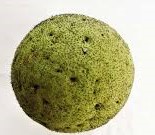
Fruit: The fruit is a compound, rounded syncarp (cluster of fused fruits) that is truly enormous—up to 40 cm (16 inches) in diameter and weighing 8–14 kg (18–31 pounds) . The exterior surface is rough and covered with pointed outgrowths. When mature, the fruit is greenish-yellow to brown. Inside the spongy, fibrous pulp are numerous orange-brown seeds, each approximately 1 cm in length. A single fruit contains 150–500 seeds. The fruit is sometimes described as having a “pineapple-like, acidulous” flavor when ripe.
Taxonomy and Varieties: The species has three recognized varieties based on detailed field observations: T. africana var. africana, T. africana var. inversa, and T. africana var. mollis. Their taxonomic differences are based mainly on fruit head size, the hairiness of branchlets and leaves, and seed characteristics. The variety inversa is native specifically to Nigeria.
Distribution and Habitat: Treculia africana is native to tropical Africa, ranging across West, Central, and East Africa. Its native range includes Nigeria, Ghana, Côte d’Ivoire, Cameroon, Gabon, Democratic Republic of Congo, Uganda, Tanzania, Sudan, Angola, and several other African countries. The tree typically grows in riverine forests, swampy areas, and mixed evergreen forests at altitudes up to 1,500 meters. It thrives in medium (loamy) to heavy (clay) soils and prefers humid tropical conditions.
Conservation Status: Despite its wide distribution, T. africana is under increasing pressure. It is classified as among the highly endangered and scarce food tree species in Nigeria due to indiscriminate exploitation and growing local and regional market demand. The species is also reported to have almost disappeared in some areas of Ghana and is present in very low densities in Tanzanian forests.
Common Names
- English: African breadfruit, Wild jackfruit, African boxwood (Malawi), Breadfruit (Nigeria)
- French: Arbre à pain d’Afrique
- German: Afrikanischer Brotfruchtbaum
- Swahili (Tanzania, Kenya): Mwaya
- Luganda (Uganda): Muzinda
- Igbo: Ukwa (the most common name for both the tree and its edible seeds)
- Yoruba: Afon
Health Benefits
Treculia africana is highly valued not only as a food source but also for its numerous medicinal properties. A 2025 review published in ScienceDirect highlights that the plant can play “the role of a supplement and a good source of essential nutrients” and exhibits “pharmacological activities along with antioxidant properties”.
- Nutritional Composition: The seeds of T. africana are exceptionally nutritious and have been described as having “excellent polyvalent dietetic value,” with the biological value of its proteins exceeding even that of soybeans.
Proximate Composition of Seeds (per 100g):
| Component | Percentage |
| Protein | 13.4 – 23.3% |
| Carbohydrates | 53.7 – 62.6% |
| Fats (Lipids) | 10.4 – 18.9% |
Data from a 2025 comparative review
Mineral Content: The seeds are rich in essential minerals including potassium, magnesium, calcium, zinc, and iron.The leaves are notably abundant in Flavonoids (antioxidant), Phenols (antioxidant), Cardiac glycosides, Anthraquinones, and Carbohydrates. These constituents contribute to the plant’s antioxidant, antimicrobial, and wound-healing properties.
The seed oil extracted from T. africana contains a stearine solid fat fraction (resembling palm kernel oil) and an olein fraction (similar to cottonseed oil), making it valuable for both nutritional and industrial applications.
- Protein Deficiency Prevention and Food Security: This is arguably the most significant health benefit of T. africana. Protein deficiency impacts over 170 million preschool children and nursing mothers in developing nations. When appropriately combined with carbohydrate sources, T. africana seeds can offer an “affordable and highly nutritious food option, aiding in the prevention of protein deficiency-related diseases and disorders, especially among school-aged children” . The seeds are often described as an “underutilized food security crop” of significant importance to the Ibo tribe of Southeastern Nigeria.
- Antioxidant Properties: The leaves of T. africana are rich in flavonoids and phenols, which provide potent antioxidant activity. Antioxidants neutralize free radicals, reduce oxidative stress, and help prevent chronic diseases including cardiovascular disorders, cancer, and neurodegenerative conditions. The 2025 review confirms that the plant demonstrates antioxidant properties alongside various pharmacological activities.
- Antimicrobial and Antibacterial Properties: Multiple studies have documented the antimicrobial and antibacterial qualities of T. africana extracts. The stem bark extract, in particular, possesses antibacterial properties and is traditionally used as a cough remedy. The latex from the tree is applied as an antibacterial agent in ear drops, and juice from the leaves is similarly used for ear infections.
- Antihyperglycemic (Anti-Diabetic) Properties: This is one of the most scientifically validated medicinal uses of T. africana. The water and ethanoic (alcohol-based) extracts of the root possess antihyperglycemic properties and may also discourage the development of secondary complications of type 2 diabetes. In Nigeria, the plant is used in the traditional management of diabetes, particularly in the South-East zone.
- Wound Healing Properties: The leaves of T. africana have documented wound-healing capabilities, attributed to their rich content of flavonoids, phenols, and other bioactive compounds. In Gabon, grated bark is applied locally to treat wounds.
- Anthelmintic (Anti-parasitic) and Febrifuge (Fever-Reducing) Properties: In Ghana, a root decoction is used as an anthelmintic (to expel parasitic worms) and as a febrifuge (to reduce fever). The root is similarly used for these purposes in other African traditional medicine systems.
- Anti-inflammatory Effects: Decoctions from different plant parts are used as an anti-inflammatory agent and in the treatment of whooping cough . Ground bark mixed with oil and other plant parts is applied to treat swellings.
- Treatment of Cough and Respiratory Conditions: A decoction (boiled extract) of the bark is used in the treatment of cough and whooping cough. Crushed leaves are applied on the tongue as a treatment for throat infections and for thrush (oral candidiasis) in children.
- Treatment of Leprosy and Skin Diseases: The plant is used in traditional medicine for the treatment of leprosy and various skin diseases. A root decoction is also used in Ghana for these purposes, and the sap of the male tree is applied to carious (decayed) teeth.
- Laxative Properties: The plant is used as a laxative in some traditional medicine systems to relieve constipation.
- Antimalarial Properties: In Southern Nigeria, a decoction of the stem bark is used orally for the treatment of malaria.
- Anemia Treatment: In Côte d’Ivoire, a decoction of T. africana leaves is taken orally to treat anemia.
- Treatment of Stomach Disorders and Gastrointestinal Infections: Decoctions from different plant parts are used in some communities as effective treatments for stomach upset and other gastrointestinal infections.
- Treatment of Malaria: In Southern Nigeria, a decoction of the stem bark is taken orally for the treatment of malaria.
- Other Traditional Medicinal Uses:
- Oxytocic (Childbirth Aid): In the Democratic Republic of Congo, a decoction of bark pieces (used in even numbers) is taken orally as an oxytocic to aid childbirth .
- Treatment of rheumatism, rashes, and mouth yaw
- Regeneration of damaged spleen and liver cells – the leaf ash is used as a remedy for enlarged spleen
- Treatment of depression and dental allergies
- Treatment of weakness and fainting – In Tanzania, fruits and seeds are used for these purposes
Important Note: The 2021 review article in the Journal of Ethnic Foods notes that “many of the perceived medicinal and chemical properties have not been scientifically investigated,” and while other members of the Moraceae family (especially Artocarpus species) have received significant research attention, “Treculia africana remains underutilized despite its great potentials as a food security and medicinal crop”.
- Supports Heart Health: The oil in the seeds contains unsaturated fatty acids which may help reduce bad cholesterol levels and support cardiovascular health when consumed moderately.
- Aids Digestion: African breadfruit contains dietary fiber that promotes proper digestion, prevents constipation, and improves bowel movement.
- Supports Healthy Bones: Its calcium and phosphorus contents contribute to bone and teeth development.
Other benefits
- Timber and Wood Products: The heartwood of T. africana is yellow with very narrow pale sapwood. It is very dense, fairly elastic and flexible, rather heavy, with a fine, even structure. The wood is suitable for Furniture and joinery; Carving, turnery, and inlay wood; Pulp and papermaking; and Firewood and charcoal production.
- Edible Oil Production: An edible oil can be extracted from the seeds. The hexane extract of Treculia seeds contains a stearine solid fat fraction (resembling palm kernel oil) and an olein fraction (similar to cottonseed oil), making it valuable for both nutritional and potential industrial applications.
- Fodder for Livestock: The fruit-head pulp and bran, which contain 9.4% and 5.7% protein respectively, can be used in livestock feed. In Tanzania, leaves are used as fodder, and in Tanzania, blue monkeys are known to be very fond of the fruit and extract the seeds.
- Soil Improvement and Erosion Control: T. africana has been used in soil conservation projects. The tree is a good source of mulch (green manure) as its leaves break down and enrich the soil. It has been recommended as a promising species for use in home gardens and for intercropping systems in agroforestry.
- Non-Alcoholic Beverage Production: A non-alcoholic beverage, sometimes described as “almond milk,” can be prepared from powdered seeds. This beverage is recommended as a breakfast drink in Nigeria.
- Ornamental Use: The tree has desirable ornamental features, including its large, attractive leaves (with red or yellow young flushes) and its massive, unusual fruits. It can be used in parks and gardens as a shade-providing tree, particularly in riverine landscapes.
- Wildlife Food Source: Chimpanzees have been observed using tools to break the fruit into small pieces they can eat and have also been observed sharing slightly alcoholic overripe breadfruit as a form of social bonding. The fruit is also consumed by various other forest animals, aiding in seed dispersal.
- Economic Importance: The seeds hold significant socioeconomic importance in Southern Nigeria, where they are an integral part of the local diet and are often sold in markets.
- Cultural Importance: In Igbo communities, Ukwa is regarded as a prestigious traditional delicacy often served during ceremonies and special occasions.
How it is used
Culinary uses (Nigerian and West African context):
- Ukwa (Igbo Delicacy): The seeds (often called “ukwa” in Igbo) are the primary edible part. They are traditionally extracted by macerating the large fruit in water to soften the fibrous pulp, allowing the seeds to be separated. The seeds are then prepared in various ways:
- Boiled Ukwa: The seeds are thoroughly boiled (often with potash to soften them and speed up cooking, or after overnight soaking if dried) until tender. They are then typically eaten as a snack or main meal, often with palm oil, salt, pepper, and sometimes ugba (oil bean seed) or stockfish.
- Roasted Ukwa: The seeds can be roasted (similar to peanuts) and eaten as a snack. The seeds are said to have a taste similar to peanuts.
- Ukwa Flour (Breadfruit Flour): The seeds are ground into a meal known as breadfruit flour. This flour can be used to produce a variety of baked foods, including bread, pasta, and baby food.
- Ukwa Porridge: Ground seeds may be cooked into a porridge or pudding, sometimes sweetened.
- Non-Alcoholic Beverage: Powdered seeds can be made into a non-alcoholic, “almond milk”-like beverage, recommended as a breakfast drink in Nigeria.
- Young Leaves: The young leaves can also be cooked and eaten as a leafy vegetable, though this is less common than seed consumption.
Common Preparation Methods and Recipes
Ukwa is versatile and prepared in several traditional ways. Fresh seeds come from the large fruit pods; dried seeds require soaking.
- Plain Boiled Ukwa (Simplest and Traditional)
- Wash seeds thoroughly.
- Boil in water, often with a small amount of edible potash (akanwu or ntu ngu) to tenderize (especially for dried Ukwa).
- Cook until soft (30–60+ minutes; pressure cooker or pre-boiling water hacks speed this up without potash).
- Serve warm, sometimes plain (it has a naturally delicious, slightly sweet taste) or with minimal additions like salt, pepper, or coconut.
- Ukwa Porridge (Most Popular Style)
This rich, savory version is the hallmark Igbo preparation:
- Key Ingredients (typical for a family serving):
- 2–5 cups Ukwa (fresh or soaked dried)
- Edible potash (akanwu) — a pinch or dissolved
- Palm oil (enough for vibrant color and richness)
- Dry/smoked fish or stockfish (azu mangala)
- Crayfish (ground)
- Pepper (scotch bonnet/Cameroon pepper, pounded or fresh)
- Bitter leaf (onugbu) or scent leaf/utazi (washed and shredded)
- Ogiri Igbo (fermented locust bean, for umami)
- Seasoning cubes, salt to taste
- Optional: Soft corn/maize, onions, dry meat (anu ukpo)
Steps (general traditional method):
- Sort and wash Ukwa. Soak dried ones overnight.
- Boil with water and potash until soft and tender.
- Add fish, crayfish, pepper, ogiri, and other seasonings.
- Stir in palm oil generously and simmer.
- Add bitter leaf toward the end for balance.
- Serve hot as a complete meal.
Variations include Jollof-style Ukwa (cooked like one-pot rice with more tomatoes/spices) or mixing with rice, maize, or yam.
Traditional medicinal uses (Africa):
The plant is highly valued in African ethnomedicine, and different plant parts are used to treat various ailments:
| Condition | Plant Part Used | Preparation Method |
| Cough, whooping cough | Stem bark | Decoction (boiled in water), taken orally |
| Diabetes | Root | Water or alcohol extract |
| Parasitic worms (anthelmintic) | Root | Decoction |
| Fever (febrifuge) | Root | Decoction |
| Swellings, inflammation | Bark | Ground, mixed with oil, applied topically |
| Leprosy, skin diseases | Bark | Various preparations (oral and topical) |
| Throat infections, thrush (children) | Leaves | Crushed leaves applied on tongue |
| Ear infections | Latex or leaf juice | Applied as ear drops |
| Wounds | Bark | Grated bark applied locally |
| Malaria | Stem bark | Decoction, taken orally |
| Anaemia | Leaves | Decoction, taken orally |
| Stomach upset, GI infections | Various parts | Decoction |
| Enlarged spleen | Leaf ash | Used as remedy |
| Constipation (laxative) | Various parts | Decoction |
| Carious teeth | Sap (male tree) | Applied topically |
Preparation methods summary:
- Decoction: Plant parts (bark, root, leaves) are boiled in water, and the resulting liquid is consumed orally.
- Topical application: Bark is ground, mixed with oil, or grated, and applied directly to swellings, wounds, or skin conditions.
- Ear drops: Latex or leaf juice is applied directly into the ear for infections.
Other uses:
- Timber: The wood is harvested for furniture, carving, and construction.
- Fodder: Fruit pulp and leaves are fed to livestock.
- Soil improvement: Fallen leaves are used as mulch to enrich soil.
- Fuel: The wood is used for firewood and charcoal production.
Side Effects / Caution
- Caustic and Toxic Sap (Critical Safety Concern): The sap of the male tree is described as caustic and toxic. Direct skin contact can cause irritation or burns. The sap should be handled with care. The sap from female trees is reportedly used medicinally, but caution is still advised.
- Antinutritional Factors in Raw Seeds: Raw seeds contain antinutritional compounds including hydrocyanic acid (cyanide), oxalates, phytates, and tannins. These must be significantly reduced through proper processing before consumption.
- Proper Processing is Essential: Traditional processing methods such as fermentation, toasting, boiling, and roasting effectively reduce antinutritional factors to safe levels. Seeds should never be consumed raw.
- Pregnancy and Lactation: The plant has documented use as an oxytocic (childbirth aid) in traditional medicine. This suggests that the plant may have effects on uterine contraction. Medicinal use during pregnancy should be strictly avoided unless under professional supervision. Safety during breastfeeding has not been established.
- Drug Interactions: Given the plant’s documented antihyperglycemic (blood sugar-lowering) properties, it may interact with diabetes medications, potentially causing hypoglycemia if blood sugar levels are not monitored.
- Conservation Concerns: Due to its status as an endangered and scarce food tree species in Nigeria and other parts of Africa, sustainable harvesting practices should be followed to preserve remaining populations.
- Allergic Reactions: As with any plant, rare allergic reactions are possible in sensitive individuals.
- Moderation: As with any food containing bioactive compounds, moderate consumption is recommended.
- High Caloric Content: Excessive consumption may contribute to excess calorie intake because the seeds are rich in carbohydrates and fats.
References
“Treculia africana Decne.” Prelude Medicinal Plants Database, Société Française d’Ethnopharmacologie, www.ethnopharmacologia.org/recherche-dans-prelude/?plant_id=5963.
“Treculia africana.” Agroforestree Database, World Agroforestry (ICRAF), apps.worldagroforestry.org/treedb2/speciesprofile.php/AFTPDFS/docs/AFTPDFS?Spid=1651.
“Treculia africana.” Integrated Taxonomic Information System (ITIS), www.itis.gov/servlet/SingleRpt/SingleRpt?search_topic=TSN&search_value=506542.
“Treculia africana.” Wikipedia, 24 Dec. 2010, en.wikipedia.org/wiki/Treculia_africana.
“Treculia Africana.” *Useful Tropical Plants*, tropical.theferns.info/viewtropical.php?id=Treculia+africana. Accessed 18 May 2026.
Ajayi, Isaac A., et al. “Chemical Composition and Nutritional Evaluation of Breadfruit Seeds (Treculia africana).” Nutrition and Food Science, vol. 36, no. 6, 2006, pp. 451–456.
Edima-Nyah, A. P., et al. “Effect of Processing and Substitution Levels of Ukwa (Treculia africana) Seed Flour on the Chemical, Sensory and Microbial Qualities of Complementary Foods.” *Frontiers in Sustainable Food Systems*, 2023.
Ezennaya, C. F., et al. “A Comparative Study of the Nutritional Composition of Raw, Boiled and Roasted Treculia africana (African Breadfruit) Seeds.” *The Bioscientist Journal*, 2023.
Hill, Laurine Korpoo, et al. “A Comparative Review of Breadfruit Seeds (Treculia africana, Artocarpus nobilis, and Artocarpus heterophyllus): Nutritional Composition, Bioactive Compounds, and Processing Techniques.” ScienceDirect, 2025, www.sciencedirect.com/science/article/abs/pii/S0254629925001863.
Nparks. “Treculia africana.” National Parks Board (NParks) Flora & Fauna Web, 13 Oct. 2021, www.nparks.gov.sg/florafaunaweb/flora/4/7/4782.
Nwabueze, T. U., and C. C. Uchendu. “Physicochemical and Sensory Properties of Breadfruit-Based Products.” African Journal of Food Science, vol. 5, no. 10, 2011, pp. 550–558.
Ojimelukwe, P. C., and F. U. Ugwuona. “The Traditional and Medicinal Use of African Breadfruit (Treculia africana Decne): An Underutilized Ethnic Food of the Ibo Tribe of South East, Nigeria.” Journal of Ethnic Foods, vol. 8, no. 21, 2021. Springer, doi:10.1186/s42779-021-00097-1.
Okafor, J. C. Indigenous Woody Plants of Southeastern Nigeria. University of Nigeria Press, 1983.
Osabor, Victor N., et al. “Nutritional Evaluation of African Breadfruit (Treculia africana) Seeds.” Pakistan Journal of Nutrition, vol. 8, no. 4, 2009, pp. 550–552.
Oyelola, O. O., et al. “Hypoglycemic Effect of Treculia Africana Decne Root Bark in Normal and Alloxan-Induced Diabetic Rats.” *African Journal of Traditional, Complementary and Alternative Medicines*, vol. 4, no. 4, 2007, pp. 498–505. PMC.
PFAF (Plants For A Future). “Treculia – Decne.” PFAF.org, pfaf.org/user/Plant.aspx?LatinName=Treculia.
Ukwuru, M. U., and F. N. Egbonu. “Recent Development in Breadfruit Research and Utilization.” International Journal of Food Science and Nutrition Engineering, vol. 3, no. 1, 2013, pp. 32–40.