
Names:
- General: Onion
- Hausa: Albasa
- Ibibio: Ayim, Eyim
- Igbo: Yabasi
- Yoruba: Alubosa
Description:
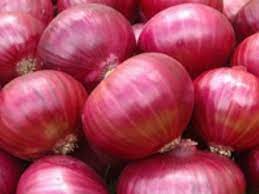
It is a perennial, herbaceous plant with the stem in the underground bulb and belongs to the family Amaryllidaceae. It has one or more leafless flower stalks that reach a height of between 75–180 cm, terminating in a spherical cluster of small greenish white flowers. Some flower clusters produce bulbils, tiny secondary bulbs that can be used to propagate new plants. The concentric leaf bases of the developing plant swell to form the underground bulb. The root system is fibrous adventitious, and the underground bulb is cylindrical and fleshy, with sheaths of leaf that have parallel venation that appears from a cluster of progressive leaves.
It can be red, white, or yellow and eaten raw, mature, pickled, or powdered in its tender condition. The bulbs vary in size, shape, colour, and pungency. Warmer climates generally produce onions with a milder, sweeter flavour than do other climates. The onion’s characteristic pungency results from the sulfur-rich volatile oil it contains which is released during peeling or chopping and brings tears to the eyes.
Cultivation/Propagation
- It is cultivated from the plant’s small black seeds, which are sown directly in the field, but onions may also be grown from small bulbs or from transplants.
- Onions can thrive under a variety of growing conditions and are very hardy.
Medicinal Benefits
- Known to possess the following properties:
- Antiplatelet; Cardioprotective; Blood thinning; Antithrombotic; Anti-blood Clotting; and Hepatoprotective.
- Antioxidant; Antihypertensive; Antidepressant; Immune boosting; and Neuroprotective
- Antibacterial; Antifungal; Antiparasitic; Insecticidal; and Wound healing
- Antihypertensive; Anti-hypercholesterolemia; Anti-obesity; Antidiabetic;
- Orexigenic (stimulates appetite); Antidiarrheal
- Anticancer; Anti-inflammatory; Antiaging;
- Helps reduce the severity of symptoms associated with conditions such as the pain and swelling of the osteo- and rheumatoid arthritis, the allergic inflammatory response of asthma, and the respiratory congestion associated with common colds.
- It contains important vitamins (A, B2, B6, C, and B1), folic acid, calcium, selenium, phosphorus, potassium, and possesses high dietary fiber and sugar content of about 90 percent water.
- WHO recommends the use of fresh onion extracts for treating coughs, colds, asthma, bronchitis, relieving hoarseness, appetite loss and preventing atherosclerosis.
- When roasted it is good for earaches and used for treating headaches, snakebites, hair loss and infertility in women.
- Improves the functioning of the digestive, circulatory, respiratory systems, and immune system.
- Lowers the risk of colorectal, lung, liver, brain, stomach, ovarian, prostate, and breast cancer.
- It sharpens the memory, strengthens the nerves and prevents neurological disorders.
- It contains essential oils that stimulates the sweat glands and promote sweating.
- Increases bone resorption activity, bone density and maintains bone health.
- Promotes healing of hypertrophic scar and prevents keloid formation.
- Improves hair health and used for reversing premature greying
- The seeds are known to increase semen production and health.
- Has diuretic effect and used for the management of oedema.
- It increases libido and strengthens the reproductive organs.
- Used for the treatment of tooth disorders
- Beneficial for extracting renal stones.
- Beneficial in the treatment of anemia.
- Used for the treatment of gallstone.
- Used to heal blisters and boils.
- Promotes menstrual flow.
Other Benefits:
- Commonly used as a flavoring or side dish, onions are a staple food in many cuisines.
- Mixed with Garlic for protecting vegetables in gardens.
- Rubbed on the skin to repel insects.
How it is Used:
- The white variety of onion should be peeled off, crushed and fried in pure butter, this mixture acts as an excellent aphrodisiac tonic if taken regularly with a spoon of honey on an empty stomach.
- When boiled in water until half of the water has evaporated, it is used for treating burning sensation in the urinary tract and improve urination in persons with urine retention.
- Onion juice dipped on cotton wool and put into the ear is a popular remedy for ringing sound in the ears. When made hot and dropped in the ear, it relieves earache.
- A cataplasm of onions pounded with vinegar, applied for a number of days, and changed 3 times a day, has been found to cure corns and bunions.
- Sugar and onion-juice form a syrup, much used in domestic practice, for cough and other affections of the air-tubes among children.
- Roasted or otherwise, it is applied as a poultice to boils, bruises, wounds, etc., to bring the boils to maturity by its heaty sensation.
- One table spoon of onion juice mixed with a spoonful of ginger juice, taken trice a day boosts libido and sex drive.
- A saturated tincture of onions made with good gin, has been found serviceable in gravel and dropsical affections.
- Eating white onion with raw sugar and some turmeric powder daily in the morning and evening time cures jaundice.
- It is chewed raw and held in the mouth to improve oral health, prevent tooth decay and treat oral infections.
- Apply juice to reduce the pain from insect bites and scorpion stings.
- Mix juice with honey or olive oil for the treatment of acne.
- The cut onions can be rubbed on Warts for treatment.
- It is pulverized/crushed and take for the management of the following conditions:
- When wrapped in a gauze or cloth and heated, it can be applied on the affected body part for the treatment of swollen feet and joints (arthritis), boils, aching throat, chest, soles, palms, back, and armpits for relief of pain.
- Elimination of lice in the hair when rubbed on the scalp and prevention of dandruff.
- Improvement of hair growth, reversal of hair loss and premature greying.
- Management of jaundice when mixed with turmeric powder and sugar.
- Elimination of worms in children.
- Treatment of Hemorrhoids.
- Treatment of indigestion.
Reported Side Effects/Caution:
- It should be avoided by persons who are dyspeptic as it encourages the production of flatus. This can be avoided by boiling the onions before consumption.
- Onion seeds have been reported as an allergen.
References:
- https://www.britannica.com/plant/onion-plant
- https://www.ncbi.nlm.nih.gov/pmc/articles/PMC8789449/
- https://www.jocpr.com/articles/allium-cepa-a-traditional-medicinal-herb-and-its-health-benefits.pdf