
Other Names
- Hindi: Haldi
- Sanskrit: Haridra
- Tamil: Manjal
- Yoruba: Atale pupa
- Chinese: Jianghuang
- Arabic: Kurkum
- Spanish: Cúrcuma
- English: Turmeric; Yellow ginger
- Hausa: Gangamau
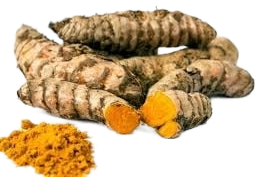
Health Benefits
Turmeric has been used for centuries in Ayurveda, Traditional Chinese Medicine, and other healing systems due to its powerful bioactive compound, curcumin. Some key health benefits include:
- Anti-Inflammatory Properties
- Curcuma longa has been extensively studied for its potential health benefits, primarily attributed to its active compound curcumin, a polyphenol with antioxidant and anti-inflammatory properties.
- Curcumin neutralizes free radicals, which can damage cells and contribute to chronic diseases, and may enhance the body’s own antioxidant enzymes.
- Antioxidant Effects
- Curcumin makes turmeric a promising agent for reducing oxidative stress and inflammation, key factors in conditions like heart disease, cancer, and neurodegenerative disorders.
- It neutralizes free radicals, protecting cells from oxidative damage and slowing aging.
- Pain Relief
- Studies indicate that curcumin can block inflammatory molecules, providing relief similar to some nonsteroidal anti-inflammatory drugs (NSAIDs) like ibuprofen, but with fewer side effects.
- For osteoarthritis, meta-analyses of randomized controlled trials show that oral turmeric or curcumin supplements (typically 500-1,000 mg daily) reduce knee pain, improve joint function, and decrease stiffness, with effects comparable to standard treatments. It may also help with rheumatoid arthritis and other joint disorders by modulating immune responses.
- Digestive Health
- Stimulates bile production, aiding digestion and relieving bloating and gas. In digestive health, turmeric has been used traditionally for indigestion and nonalcoholic fatty liver disease (NAFLD).
- It is used to treat ulcers and reduce symptoms of irritable bowel syndrome and improve liver enzymes in NAFLD patients.
- Boosts Immunity
- Enhances immune response and may help fight viral and bacterial infections.
- Aids wound healing.
- Heart Health
- Turmeric shows promise for cardiovascular health. Curcumin may lower LDL (bad) cholesterol and triglycerides, improve endothelial function (the lining of blood vessels), and reduce the risk of heart attacks, as seen in a study of post-bypass surgery patients where 4 grams daily decreased cardiac events by 65%.
- Neurological Health:
- For brain health, curcumin could cross the blood-brain barrier, potentially alleviating symptoms of depression and anxiety by boosting neurotransmitters like serotonin and dopamine, and slowing Alzheimer’s progression by clearing amyloid plaques.
- Antimicrobial and Antiviral Properties:
- Turmeric has shown activity against bacteria, viruses, and fungi, making it a natural aid in fighting infections.
- Anti-Cancer Effects:
- Early research also points to anticancer effects, as curcumin may inhibit tumor growth and enhance chemotherapy efficacy, though more human trials are needed.
- Diabetes Management:
- Studies show that turmeric helps regulate insulin levels and may be useful in managing type 2 diabetes.
- Helps regulate blood sugar levels and improves insulin sensitivity.
- Skin Health:
- Treats acne, eczema, and psoriasis due to its antibacterial and anti-inflammatory effects.
Note:
Curcumin’s low bioavailability means benefits are often enhanced by combining it with black pepper (piperine) to increase absorption by up to 2,000%.
Other Benefits
Beyond health, Curcuma longa has diverse non-medical applications rooted in its vibrant color and chemical properties.
- Culinary: It is a staple spice in global cuisines, particularly in dishes like curries, where it imparts a warm, earthy flavor and mustard-like aroma. Turmeric is a key component of curry powder and is used to color mustards, butters, cheeses, and relishes.
- Industrial: Turmeric serves as a natural dye for textiles and foods, approved by organizations like the FDA and WHO as a safe additive (E100). Its curcumin content provides a bright yellow hue for fabrics, cosmetics.
- Religious & Cultural uses: In religious ceremonies in India, it is used in rituals and as a body paint. It features in Austronesian cultures for dyeing and body painting during animistic rituals.
- Cosmetic: Traditionally used in skin care, turmeric is added to facial masks, soaps, and creams to improve complexion, reduce acne, and slow skin aging.
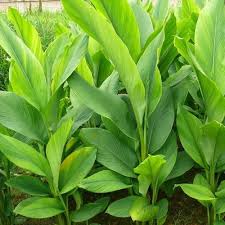
How It Is Used
Turmeric can be consumed or applied in various forms:
- Dietary Use:
- Spice: As a spice, the rhizome is boiled, dried, and ground into powder for cooking, added to curries, soups, rice, or smoothies for flavor and color.
- Fresh root: Fresh root can be grated into juices, smoothies, dishes or steeped as tea (golden milk) with milk, black pepper, and honey.
- Medicinal Preparations
- Turmeric tea: Boiled with ginger and honey for cold relief.
- Turmeric paste: Mixed with honey or coconut oil for wound healing.
- Supplements: Curcumin capsules (often combined with black pepper for better absorption).
- Topical Applications
- Face masks: Mixed with yogurt or aloe vera for skin brightening.
- Anti-inflammatory paste: Applied to bruises, sprains, or insect bites.
Side Effects and Cautions
Although turmeric is generally safe when consumed in food, high doses or long-term use can cause some adverse effects:
Gastrointestinal Issues: Excessive intake may lead to stomach upset, nausea, or diarrhea.
Gallbladder Problems: It can worsen gallstones or bile duct obstruction. Avoid in persons with gallbladder issues.
Drug Interaction:
Blood Thinning: Turmeric may slow blood clotting; individuals taking anticoagulant drugs like warfarin should exercise caution.
Antidiabetic drugs: Diabetics should monitor blood sugar levels as it reduces blood sugar, amplifying diabetes drugs
Iron Absorption: It may interfere with iron absorption, posing a risk for people with anemia. Those with iron deficiency should be cautious.
Pregnancy and Breastfeeding – While safe as a spice, high doses in supplements should be avoided during pregnancy due to possible uterine stimulation.
References
- 10 Health Benefits of Tumeric and Curcumin. Healthline, 7 July 2025, www.healthline.com/nutrition/top-10-evidence-based-health-benefits-of-turmeric.
- A Comprehensive Review on the Therapeutic Potential of Curcuma longa Linn. in Relation to its Major Active Constituent Curcumin. Frontiers in Pharmacology, 26 Jan. 2022, www.frontiersin.org/journals/pharmacology/articles/10.3389/fphar.2022.820806/full.
- Aggarwal, Bharat B., et al. Turmeric and Curcumin: Biological Actions and Medicinal Applications. CRC Press, 2021.
- Aggarwal, Bharat B., and Kuzhuvelil B. Harikumar. Potential Therapeutic Effects of Curcumin, the Anti-Inflammatory Agent, Against Neurodegenerative, Cardiovascular, and Metabolic Diseases. International Journal of Biochemistry & Cell Biology, vol. 41, no. 1, 2009, pp. 40–59.
- Anti-inflammatory properties of curcumin, a major constituent of Curcuma longa: a review of preclinical and clinical research. PubMed, 18 June 2009, pubmed.ncbi.nlm.nih.gov/19594223/.
- Curcumin benefits, dosage, and side effects. Examine, 20 Mar. 2024, examine.com/supplements/curcumin/.
- Curcuma Longa – an overview. ScienceDirect, www.sciencedirect.com/topics/agricultural-and-biological-sciences/curcuma-longa.
- Curcuma longa (Turmeric): Ethnomedicinal uses, phytochemistry, pharmacological activities and toxicity profiles—A review. ScienceDirect, 28 Feb. 2023, www.sciencedirect.com/science/article/pii/S2667142523000088.
- Curcumin (turmeric) for reducing inflammation. Mayo Clinic Connect, 19 Oct. 2022, connect.mayoclinic.org/discussion/curcumin-turmeric-for-reducing-inflammation/.
- Prasad, Sahdeo, and Bharat B. Aggarwal. Turmeric, the Golden Spice: From Traditional Medicine to Modern Medicine. Herbal Medicine: Biomolecular and Clinical Aspects, 2nd ed., CRC Press, 2011.
- Hewlings, Susan J., and Douglas S. Kalman. Curcumin: A Review of Its Effects on Human Health. Foods, vol. 6, no. 10, 2017, p. 92.
- Jurenka, Julie S. Anti-Inflammatory Properties of Curcumin, a Major Constituent of Curcuma longa: A Review of Preclinical and Clinical Research. Alternative Medicine Review, vol. 14, no. 2, 2009, pp. 141–153.
- Menon, Venugopal P., and Adluri Ram Sudheer. Antioxidant and Anti-Inflammatory Properties of Curcumin. Advances in Experimental Medicine and Biology, vol. 595, 2007, pp. 105–125.
- Curcumin: A Review of Its’ Effects on Human Health – PMC. PubMed Central, 21 Oct. 2017, pmc.ncbi.nlm.nih.gov/articles/PMC5664031/.
- Curcuma Longa: Benefits, Uses, Dosage, and Side Effects. Drug Today Online, www.drugtodayonline.com/drug-directory/drug_info/curcuma-longa.
- Effects of Turmeric (Curcuma longa) on Skin Health: A Systematic Review of the Clinical Evidence. PubMed, 12 Aug. 2016, pubmed.ncbi.nlm.nih.gov/27213821/.
- Frontiers | A Comprehensive Review on the Therapeutic Potential of Curcuma longa Linn. in Relation to its Major Active Constituent Curcumin. Frontiers in Pharmacology, 26 Jan. 2022, www.frontiersin.org/journals/pharmacology/articles/10.3389/fphar.2022.820806/full.
- JAVANESE TURMERIC: Overview, Uses, Side Effects, Precautions, Interactions, Dosing and Reviews. WebMD, www.webmd.com/vitamins/ai/ingredientmono-532/javanese-turmeric.
- Medicines containing turmeric or curcumin – risk of liver injury. Therapeutic Goods Administration (TGA), 14 Aug. 2023, www.tga.gov.au/news/safety-alerts/medicines-containing-turmeric-or-curcumin-risk-liver-injury.
- Mountsinai. Mount Sinai Health System, www.mountsinai.org/health-library.
- Prasad, Sahdeo, et al. Turmeric, the Golden Spice: From Traditional Medicine to Modern Medicine. Herbal Medicine: Biomolecular and Clinical Aspects, 2nd edition, CRC Press, 2011.
- TREE TURMERIC: Overview, Uses, Side Effects, Precautions, Interactions, Dosing and Reviews. WebMD, www.webmd.com/vitamins/ai/ingredientmono-1125/tree-turmeric.
- TURMERIC: Overview, Uses, Side Effects, Precautions, Interactions, Dosing and Reviews. WebMD, 7 May 2025, www.webmd.com/vitamins/ai/ingredientmono-662/turmeric.
- Turmeric – Wikipedia. Wikipedia, 5 May 2025, en.wikipedia.org/wiki/Turmeric.
- Turmeric and Curcumin: Health, Spice, and Supplement Information From WebMD. WebMD, 13 Nov. 2023, www.webmd.com/diet/supplement-guide-turmeric.
- Turmeric Benefits. Johns Hopkins Medicine, 19 June 2024, www.hopkinsmedicine.org/health/wellness-and-prevention/turmeric-benefits.
- Turmeric benefits: A look at the evidence. Harvard Health Publishing, 21 Mar. 2024, www.health.harvard.edu/staying-healthy/turmeric-benefits-a-look-at-the-evidence.
- Turmeric Dosage: How Much Should You Take Per Day? Healthline, 11 May 2025, www.healthline.com/nutrition/turmeric-dosage.
- Turmeric Health Benefits and Side Effects. Cleveland Clinic, 27 Mar. 2025, health.clevelandclinic.org/turmeric-health-benefits.
- Turmeric Tea: Is It Good for You? Pros and Cons, Nutrition, and More. WebMD, 21 Sept. 2022, www.webmd.com/diet/turmeric-tea-good-for-you.
- Turmeric: Usefulness and Safety. NCCIH, 14 Apr. 2025, www.nccih.nih.gov/health/turmeric.
- Turmeric | Description, History, & Uses. Britannica, 10 July 2025, www.britannica.com/plant/turmeric.
- World Health Organization. WHO Monographs on Selected Medicinal Plants, Volume 1. WHO, 1999.
- Yadav, Vijay L., et al. Therapeutic Potential of Curcuma longa in Human Diseases. Phytotherapy Research, vol. 36, no. 1, 2022, pp. 72–90.