
Names:
English: Velvet-leaf Desmodium
Yoruba: Agummonu; Agogo Igi
Igbo: Obi nwoke; Mgbamgbụ
Hausa: Ratsanya; Chanchangi
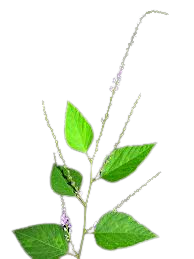
Health Benefits
- Anti-diarrheal Effects: The dichloromethane-methanol extract and its fractions significantly reduce normal defecation and protect against castor oil-induced diarrhea in rats, with inhibition rates ranging from 33–100%. Decoctions from the leaves and roots are traditionally used to manage digestive problems such as diarrhea and dysentery.
- Gastroprotective Effects: The methanol leaf extract, especially when combined with honey, shows potent anti-ulcer activity, with up to 100% inhibition of ethanol-induced gastric ulcers in rats at a dose of 500 mg/kg combined with 1 ml of honey.
- Anti-inflammatory Properties: Ethanolic leaf extracts exhibit anti-inflammatory activities, attributed to the presence of tannins. Helps reduce inflammation and pain in conditions like arthritis.
- Antibacterial Activity: The crude extract inhibits the growth of pathogens like Bacillus cereus, Pseudomonas aeruginosa, Escherichia coli, and Salmonella typhi, with minimum inhibitory concentrations (MICs) ranging from 37.15 to 100 mg/ml.
- Antioxidant Potential: Flavonoids and other phytochemicals contribute to its antioxidant effects, protecting against oxidative stress.
- Anticancer Properties: Isoflavonoids from the roots, such as desmovelutins and desmovelisoflavans, show cytotoxicity against human cancer cell lines (e.g., MOLT-3) with IC50 values of 3.4–27.9 μM.
- Antimicrobial Activity: The plant has demonstrated inhibitory effects against bacterial and fungal infections, making it useful in managing wounds and skin infections.
- Fever and Malaria: Some Nigerian communities use the plant in combination with other herbs to manage malaria and fever-related conditions.
- Other Therapeutic Uses: It is used traditionally for fever, pain, and conditions like kidney stones and diabetes in animal models.
- Liver Protection: Supports liver health and may aid in detoxification.
Other Benefits
- Soil Improvement: Desmodium velutinum is a leguminous plant, capable of fixing atmospheric nitrogen into the soil, thereby improving soil fertility. It is used in agroforestry to fix nitrogen in the soil.
- Animal Fodder: The leaves serve as a good source of protein for livestock, especially during the dry season when grasses are scarce.
- Erosion Control: The plant’s dense foliage and root system help in controlling soil erosion on slopes and degraded lands.
- Ecological Adaptability: As a tropical perennial herb, it thrives in well-drained soils, forest understories, and open areas, attracting pollinators and aiding seed dispersal through its hitchhiking pods.
- Agricultural Use: Its drought tolerance and adaptability make it a candidate for sustainable agriculture in tropical environments.
How It Is Used
Medicinal Preparations:
Decoctions and Extracts: Leaves are processed into dichloromethane-methanol or ethanolic extracts for oral administration to treat diarrhea, ulcers, and inflammation.
Infusion: The leaves are sometimes steeped in hot water to make herbal teas that are consumed for general wellness or to manage infections.
Combination Therapy: Combined with honey to enhance anti-ulcer effects in rats.
Traditional Remedies: Used by indigenous Nigerian communities for headaches, fever, toothaches, and pain relief.
Poultice: Crushed leaves are applied to wounds or inflamed areas to reduce pain and inflammation.
Agricultural Use: it is grown as a forage crop and leaves are harvested for animal feed due to their high nutritional content. The whole plant can be harvested and dried or fed fresh to cattle, goats, and sheep.
Pruning and Cultivation: Pruned in early spring or late winter to maintain plant vigor and promote healthy growth.
Side Effects / Caution
- Dosage Sensitivity: Toxicity at High Doses: Morphological changes in hepatocytes and renal cells were observed at high concentrations (100 mg/ml) in cell studies, indicating potential toxicity at excessive doses. Like many traditional herbs, improper dosing may lead to gastrointestinal discomfort or toxicity. It is important to follow traditional or expert guidance.
- Pregnancy and Breastfeeding: There is limited research on the safety of Desmodium velutinum for pregnant and breastfeeding women. It is best avoided unless prescribed by a qualified herbal practitioner.
- Drug Interactions: It may interact with antimalarial or anti-inflammatory medications. Users should consult healthcare providers if combining with pharmaceutical drugs.
- Need for Regulation: As with many herbal medicines, unmonitored use can pose risks. Regulatory oversight is recommended to ensure safety, especially for long-term use.
References
- Adjanohoun, E. J., et al. Traditional Medicine and Pharmacopoeia: Contribution to Ethnobotanical and Floristic Studies in Nigeria. Scientific, Technical, and Research Commission, 1991.
- Banso, A., and A.A. Ngbede. “Phytochemical Screening and Antibacterial Evaluation of Desmodium velutinum (Wild) DC.” African Journal of Biotechnology, vol. 4, no. 12, 2005, pp. 1390–1393.
- Burkill, H. M. The Useful Plants of West Tropical Africa. 2nd ed., Royal Botanic Gardens, Kew, 1994.
- Cueva-Chamba, Diego, et al. “The Desmodium Genus: Traditional Uses, Phytochemistry, and Pharmacological Activities.” Frontiers in Pharmacology, vol. 14, 2023, doi:10.3389/fphar.2023.1132639.
- Ezike, Adaobi C., et al. “Gastroprotective Effects of Methanol Leaf Extract of Desmodium velutinum (Fabaceae) and Honey on Ethanol-Induced Gastric Ulcer in Albino Rat: The Concept of Combination Therapy.” ResearchGate, 22 Oct. 2024, www.researchgate.net/publication/385133564.[](https://www.researchgate.net/publication/277608501_Studies_on_gastrointestinal_effects_of_Desmodium_velutinum_A_traditional_remedy_for_diarrhea)
- Gill, L.S. Ethnomedicinal Uses of Plants in Nigeria. University of Benin Press, 1992.
- Kaweetripob, Wannachai, et al. “Cytotoxic Isoflavonoids from the Roots of Desmodium velutinum (Willd.) DC.” Phytochemistry Letters, vol. 47, Feb. 2022, pp. 93–99, doi:10.1016/j.phytol.2021.11.013.
- Ma, X., et al. “The Genus Desmodium (Fabaceae) – Traditional Uses in Chinese Medicine, Phytochemistry and Pharmacology.” Journal of Ethnopharmacology, vol. 138, no. 2, 18 Nov. 2011, pp. 314–332, doi:10.1016/j.jep.2011.09.053.
- Magne, K., et al. “Safety of Desmodium adscendens Extract on Hepatocytes and Renal Cells. Protective Effect Against Oxidative Stress.” Journal of Interdisciplinary Histopathology, vol. 2, no. 4, 28 Nov. 2014, pp. 173–179, doi:10.5455/jihp.20140401013024.
- Nwachukwu, C. U., et al. “Antimicrobial Activity of Desmodium velutinum Stem Extract.” African Journal of Biotechnology, vol. 9, no. 15, 2010, pp. 2218-2222.
- Odugbemi, T. Outlines and Pictures of Medicinal Plants from Nigeria. University of Lagos Press, 2006.
- Ogundare, A. O., and O.O. Onifade. “Evaluation of Antimicrobial and Antioxidant Activities of Desmodium velutinum Leaves.” Journal of Medicinal Plants Research, vol. 6, no. 28, 2012, pp. 4491–4496.
- Schultze-Kraft, R., et al. “Desmodium velutinum – a High Quality Legume Shrub for Acid Soils in the Tropics.” Tropical Grasslands, vol. 39, 2005, p. 231, bit.ly/39vxvlL.
- “Villous Leaf Desmodium (Desmodium velutinum).” PictureThis, www.picturethisai.com/wiki/Desmodium_velutinum.html. Accessed 2 Aug. 2025.