
The Wonder Nut of West and Central Africa
Garcinia kola, a tree belonging to the Clusiaceae family, is native to West and Central Africa, where it grows in tropical rainforests and is cultivated for its seeds. Revered for its characteristically bitter taste that is swiftly followed by a sweet aftertaste, Garcinia kola is more than just a seed; it is a cultural icon and a pharmacological treasure in African traditional medicine. Often called “bitter kola” in English, this plant has been used for centuries to treat a wide array of ailments and is deeply embedded in social and cultural ceremonies. They have been used in traditional medicine for centuries to treat a variety of ailments due to their rich phytochemical content, including biflavonoids like kolaviron, benzophenones, and xanthones.
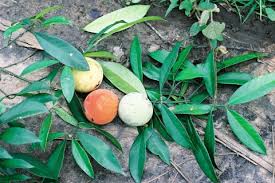
Other Names
- English: Bitter Kola, African Wonder Nut
- Igbo: Ọjịlị, Akiilu, Ugolo
- Yoruba: Orogbo
- Edo: Ebo
- Ika: Edu
- Cameroon: Adjèlè, Édèlè
- Hausa: Namijin goro
- French: Garcinia amer, Noix de kola amère
Health Benefits
The immense health benefits of Garcinia kola are attributed to its rich and unique phytochemistry, most notably the prenylated benzophenones like kolaviron, which is a complex of bioflavonoids. Modern science is increasingly validating its traditional uses.
- Respiratory Relief: This is one of its most common traditional uses. The seed is chewed to relieve coughs, colds, and chest congestion. Its natural bronchodilator properties help ease asthma symptoms and improve lung function.
- Potent Antioxidant Activity: Kolaviron and other compounds are powerful antioxidants that help neutralize harmful free radicals, protecting cells from oxidative damage linked to chronic diseases like cancer, arthritis, and aging.
- Anti-inflammatory and Analgesic Effects: Extracts from the seed have demonstrated significant anti-inflammatory properties, making it useful for reducing inflammation and pain associated with arthritis, rheumatism, and general body pain.
- Hepatoprotective (Liver-Protecting) Properties: Numerous studies have shown that kolaviron protects the liver from damage caused by toxins like carbon tetrachloride and aflatoxin B1, drugs (like paracetamol overdose), and infections like hepatitis. It can aid in liver regeneration.
- Antimicrobial Properties: Garcinia kola has been shown to inhibit the growth of a range of microbes, including bacteria (e.g., Staphylococcus aureus, Escherichia coli) and fungi, supporting its use in treating infections.
- Immune System Boost: It is widely believed to boost the immune system and increase the body’s resistance to infections.
- Blood Glucose Regulation: It exhibits antidiabetic potential by reducing blood glucose levels and protecting against hypoglycemia in type 2 diabetes models. It may be beneficial for managing diabetes.
- Aphrodisiac and Fertility Enhancement: It is traditionally consumed as an aphrodisiac to boost libido and is believed to improve sperm count and quality in men.
- Eye Health: Studies indicate it can lower intraocular pressure, potentially benefiting glaucoma patients.
- Other Health Benefits: Additional benefits include Nephroprotective effects against kidney damage, cardiovascular protection, neuroprotective effects against oxidative stress, anticancer activity through apoptosis induction, and antimalarial properties against Plasmodium species. It acts to reduce blood pressure in those with high-normal or grade I hypertension.
Other Benefits
Beyond its medicinal uses, Garcinia kola holds significant social and economic value.
- Cultural and Social Significance: It is an essential item in many traditional ceremonies, including naming ceremonies, weddings, and festivals. It is offered to guests as a sign of hospitality and respect.
- Stimulant: Due to its caffeine content, it is chewed as a stimulant to fight fatigue and increase alertness, similar to the related kola nut (Cola nitida).
- Economic Importance: The harvesting, processing, and selling of bitter kola provide a source of income for many farmers and traders in West and Central Africa.
- Purgative: It is sometimes used in small doses to treat constipation and cleanse the digestive system.
- Food Processing and Brewing: It is used in brewing lager beer as a hop substitute to prevent spoilage, and its antimicrobial properties make it suitable for food preservation against pathogenic bacteria.
- Chewing Stick: The roots and seeds function as chewing sticks for oral hygiene, leveraging antibacterial effects.
- Animal Feed: The seed hulls, rich in protein, serve as nutritious fodder for livestock.
- Pest control: Seed extracts are sometimes used to repel insects in stored grains.
How It Is Used
The use of Garcinia kola is typically straightforward, with the seed (nut) being the primary part consumed.
- Chewing: The most common method. The raw seed is peeled and chewed fresh for its immediate effects on respiratory issues, as a stimulant, as an aphrodisiac, or for general well-being.
- Powder: The dried seeds can be ground into a powder. This powder can be:
- Encapsulated as a supplement.
- Mixed with water or honey and consumed.
- Applied topically to wounds (though less common).
- Decoction/Infusion: The seeds or bark can be boiled in water to make a tea or a more concentrated liquid medicine for treating hypertension, fevers, infections, or liver problems.
- Extracts: Commercial and laboratory extracts are made to isolate active compounds like kolaviron for pharmacological studies and product development.
- Drinks: It can also be incorporated into drinks or used externally as oil pressed from seeds for skin applications.
- Topical application:
- Crushed seeds or bark applied to skin infections and wounds.
- Latex from the bark is applied topically for wound healing and inflammation.
Side Effects and Caution
Garcinia kola is generally considered safe with low toxicity, as indicated by an LD50 of 5000 mg/kg in animal studies, and no serious adverse effects reported in traditional use. While generally safe when consumed in moderate, traditional food amounts, there are important cautions to consider.
- Caffeine Content: As a stimulant, overconsumption can lead to side effects such as insomnia, nervousness, restlessness, stomach irritation, nausea, and increased heart rate.
- Pregnancy and Breastfeeding: Its use is not recommended during pregnancy or breastfeeding due to a lack of sufficient safety data and its stimulant properties.
- Existing Health Conditions: Individuals with heart conditions, high blood pressure, anxiety disorders, or insomnia should use it cautiously due to its stimulant effects.
- Drug Interactions: It may interact with certain medications, including:
- Diabetes medications, potentially causing blood sugar to drop too low (hypoglycemia).
- Stimulants and MAOIs, leading to excessive stimulation.
- Blood-thinning medications (anticoagulants), as it may affect blood clotting.
- Dosage: There is no standardized dose. Long-term, high-dose consumption should be avoided unless under medical supervision. Stick to traditional, occasional use.
References
Adegbehingbe, Olayinka O., et al. Clinical effects of Garcinia kola in knee osteoarthritis. Journal of Orthopaedic Surgery and Research, vol. 3, 30 July 2008, article 34. BioMed Central, josr-online.biomedcentral.com/articles/10.1186/1749-799X-3-34.
Adesanwo, J. K., et al. Antioxidant and Antibacterial Activities of Kolaviron and Compounds from the Seeds of Garcinia kola. Journal of Food Biochemistry, vol. 43, no. 7, 2019, p. e12876.
Adesuyi, A. O., et al. Nutritional and phytochemical screening of Garcinia kola. Advances in Applied Science Research, vol. 3, no. 4, 2012, pp. 173–178.
Ayoola, Gloria A., et al. Garcinia kola seed supplementation reduces the blood pressure in patients with high-normal blood pressure or grade I hypertension: a single-center, single-arm, non-randomized open-label study. Integrative Medicine Research, vol. 10, no. 2, June 2021, article 100692. OAText, www.oatext.com/garcinia-kola-seed-supplementation-reduces-the-blood-pressure-in-patients-with-high-normal-blood-pressure-or-grade-i-hypertension-a-single-center-single-arm-non.php.
Dogara, Abdul Manaf, et al. Biological Evaluation of Garcinia kola Heckel. Advances in Pharmacological and Pharmaceutical Sciences, vol. 2022, 28 Apr. 2022, pp. 1-12. Wiley Online Library, onlinelibrary.wiley.com/doi/10.1155/2022/3837965.
Farombi, Ebenezer O., et al. Garcinia kola: A phytochemical and pharmacological review. Phytotherapy Research, vol. 29, no. 5, 2015, pp. 655–668.
Farombi, E. O. Kolaiviron: A Bioflavonoid with Diverse Biological Benefits. Food and Chemical Toxicology, vol. 132, 2019, p. 110676.
Farombi, Ebenezer Olatunde, et al. Garcinia kola: a critical review on chemistry and pharmacology of an important West African medicinal plant. Phytotherapy Research, vol. 37, no. 7, 23 May 2023, pp. 2907-2938. PMC, pmc.ncbi.nlm.nih.gov/articles/PMC10205037/.
Health Benefits of Bitter Kola. WebMD, WebMD LLC, www.webmd.com/diet/health-benefits-bitter-kola. Accessed 5 Sept. 2025.
Garcinia Kola – an overview. ScienceDirect Topics, Elsevier, www.sciencedirect.com/topics/agricultural-and-biological-sciences/garcinia-kola. Accessed 5 Sept. 2025.
Ibrahim, M., et al. A Review on the Phytochemistry and Pharmacology of Garcinia kola (Heckel) Seed. Journal of Pharmacognosy and Phytotherapy, vol. 12, no. 2, 2020, pp. 29-40.
Iwu, Maurice M. Handbook of African Medicinal Plants. 2nd ed., CRC Press, 2014.
Nwamu, C. B., et al. Medicinal uses and pharmacological activities of Garcinia kola (Heckel): A review. Global Journal of Pure and Applied Sciences, vol. 26, no. 2, 2020, pp. 185–194.
Olaleye, M. T., et al. Antioxidant Activity and Hepatoprotective Property of Kolaviron from Garcinia kola on Acetaminophen-Induced Liver Damage. Rats. Journal of Pharmacy & Bioresources, vol. 3, no. 2, 2006, pp. 117-25.
Terashima, K., et al. Antimicrobial and Anti-inflammatory Actions of Garcinia kola Seed Extracts. Journal of Ethnopharmacology, vol. 152, no. 3, 2014, pp. 485-93.