
Names:
- General: Bush buck
- Ibibio: Utasi
- Igbo: Utazi
- Yoruba: Arokeke
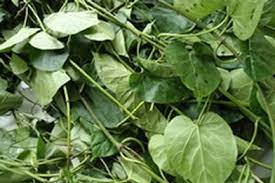
Description:
It belongs to the family of plants known as Asclepiadaceae and it is widespread in tropical rainforests of West African countries. It is a climbing shrub that reaches more than 5m long with woody base, hollow stems and fleshy roots. It has a characteristic soft/hairy stem with latex. The leaves are broad, heart shaped and slightly oval in appearance with a deeply cordate base; and they are characterized by a distinguishable bitter taste especially when eaten fresh however the bitter taste tends to slightly disappear if the leaves get dried. The flowers are small and bisexual with a characteristic yellowish-green appearance, and are seasonal mainly around July and September in Nigeria. The fruits are oblong, green and turns yellow when ripe. The seeds are dispersed like cotton seeds when the fruit matures after it dries and breaks.
Cultivation/Propagation
- It can be propagated by planting a cutting of the stem.
- The seeds also grow when harvested matured.
Medicinal Benefits
- Gongronema latifolium has been used in many cultures for the management of various diseases and promotion of wellbeing due to the following attributes of the plants:
- Treats digestive problems like: loss of appetite; dyspepsia; colic; stomach ache; constipation; dysentery and intestinal worms.
- Promotes the detoxification actions of the liver.
- Enhances the activities of the pancreas.
- Stimulates the flow of bile.
- Cardiovascular protective.
- Prevents liver damage.
- Lowers blood sugar.
- Anti-arteriosclerosis.
- Improves digestion.
- Cancer prevention.
- Anti-inflammatory.
- Antiinflammation.
- Protects the liver
- Antihypertensive.
- Liver protection.
- Anti helminthic.
- Anti asthmatic.
- Antimicrobial.
- Anti sickling.
- Antidiabetic.
- Antimalarial.
- Anti allergic.
- Antioxidant.
- Antipyretic.
- Antibiotic.
- Analgesic.
- Anti-ulcer.
Other Benefits:
- Its bitter-sweet taste and flavor makes it a local spice and vegetable for food preparations such as; abacha, nkwobi, unripe plantain porridge, ugba, local soups such as nsala (white soup), sauces, salads, isiewu and many other food preparations.
- The stems serve as chewing sticks
How it is Used:
- Whole plant can be infused in boiling water and taken as tea, boiled as decoction and used:
- for the treatment of kidney diseases.
- as remedy for dysentery and intestinal worms.
- as treatment of hypertension, diabetes, and liver damage.
- The leaves are used to prepare soups for postpartum mothers to stimulate appetite, reduce postpartum contraction; enhance the return of the menstrual cycle; and control of weight gain in lactating women.
- The roots are mixed with other herbs like Ocimum gratissimum (scent leaf) for the treatment of sickle cell anemia.
- The leaves are chewed raw as a fast relief for catarrh, congested chest, running nose, cough, fever, asthmatic attacks, etc.
- The leaves are squeezed and used for the massage joints for the management of arthritic disorders in all ages.
- The dried or fresh leaves can be infused in alcohol for treatment of viral hepatitis, malaria, bilharzia.
- The latex from the fruits is applied directly on the teeth to manage dental caries.
- The fruits when cooked and eaten serves as a laxative.
Reported Side Effects/Caution:
- Those with bleeding disorders should be cautious because of the blood thinning property.
- When consumed in large quantity, it can cause stomach discomfort, bloating and diarrhea.
- Can cause contraction of the uterus and should be used with caution in pregnancy.
References:
- https://uses.plantnet-project.org/en/Gongronema_latifolium_(PROTA)
- https://punchng.com/nigerias-medicinal-plant-gongronema-latifolium-arokeke/
- https://guardian.ng/features/health/health-benefits-of-gongronema-latifolium-utazi/
- https://globalfoodbook.com/benefits-of-gongronema-latifolium-utazi
- https://pickasblog.com/side-effect-of-utazi-leaf/
- https://www.publichealth.com.ng/health-benefits-and-side-effects-of-utazi-leaf/