
Names:
- General: African peach
- Hausa: Tafashiya, tashiyaigia, tafiyaigia, Marga, tabashiya, tuwon biri
- Ibibio: Mbom ibong
- Igbo: Uburu ilu; Uvuru ilu
- Yoruba: Egbesi
Description:
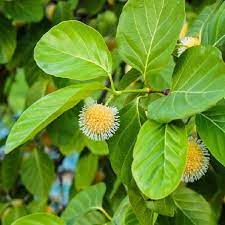
Uburu ilu is a spreading, multi-stemmed, evergreen, deciduous shrub or small tree that belongs to the family Rubiaceae. It has an open canopy and branches from low down the main stem of the tree. The tree varies widely in height from around 10 meters up to 30 meters according to soil and moisture conditions.
The Bark is dark gray, fibrous, and cracked. The leaves are glabrous, opposite, elliptical, shortly acuminate, obtusely narrowed or nearly rounded at the base, glossy green with tufts of hairs with about 7–8 lateral veins on each side, 2–8 inches long and 1–4 inches wide.
It is well-known for its distinctive flowers, which are small and arranged in dense, spherical clusters that resemble pin cushions; joined by their calyces measuring about 2mm in diameter, whitish and sweet smelling. The fruits are fleshy, shallow-pitched, globular berry, usually red or orange when ripe, with numerous seeds embedded in a pink edible, sour tasting pulp. The seeds are usually small, ovoid, numerous and brownish with a pleasant taste
Cultivation/Propagation
- The seeds germinate very easily in appropriate soil especially when it is passed in stool of animals.
- The cuttings can be used to propagate the plant.
Medicinal Benefits
- Possesses antiulcer; antisecretory, antimicrobial, antiviral, antifungal, anti-helminthic, antiplasmodial, antibacterial, anti-trypanosomal, antioxidant, antidiarrheal, antihypertensive, hypolipidemic, cardiovascular protective, hepatoprotective; hypoglycemic; sedative, anticonvulsant, antidepressant; myorelaxant; anti-anxiety; anti-nociceptive, anti-inflammatory; antipyretic; wound healing; and abortifacient.
- The plant contains several bioactive compounds, including alkaloids, flavonoids, tannins, saponins, and glycosides, which contribute to its medicinal value.
- Used for the treatment of malaria, leprosy, debility, hypertension, gastrointestinal disorders, prolonged menstrual flow and sleeping sickness.
- Used for the treatment of fevers; pain; jaundice; indigestion; diarrhea; dysentery; and diabetes.
- The fruits are used in the treatment of piles (hemorrhoids); dysentery; colic; and dyspepsia
- The root bark is used as tonic, antipyretic, antidepressant and analgesic.
- A cold infusion of the stem bark is taken as a diuretic and anti-helmintic.
- Used for the treatment of cough; dental caries; and septic mouth
- Used for arresting preterm contradictions in pregnant women.
- Increases sperm motility and viability of testicular cells.
- The leaf extract is used for deworming.
- Used for treating leprosy.
Other Benefits:
- In some African cultures, Uburu ilu is used in traditional rituals and ceremonies as it believed to have spiritual properties and is often used in protective charms and amulets.
- The plant’s attractive flowers and foliage make it a popular choice for ornamental purposes in gardens and landscaping.
- It is used as shade; windbreak; barriers in farms; and planted for soil conservation and soil stabilization.
- The small twigs are used as chewing sticks for the treatment of oral infections and gingivitis.
- The bark is a source of tannins and a yellow dye is obtained from the roots.
- The wood is resistant to termites and is used for woodworks as well as fuel.
- The over-ripe fruits are dried and powdered and used as base for drinks.
- Fruits can be consumed raw and can be used for preparing drinks.
- Flower can be cooked and consumed as vegetable.
- The leaves are used as mulch.
How it is used:
- The decoctions of the stem bark and roots are used for the treatment of jaundice, fever, stomach ache, dysentery and arresting preterm contractions.
- Fresh leaves or bark are crushed and applied as a poultice to wounds, sores, and inflamed areas of the skin to promote healing and reduce pain.
- The decoction of the stem, bark and roots of Uburu ilu are used against fever, jaundice, malaria, diarrhea, dysentery, hypertension and diabetes.
- Defoliated branches are used as a chew stick by humans for the prevention of caries and as remedy against stomach ache and tuberculosis.
- The decoction of the root is used in the treatment of respiratory illnesses such as tuberculosis, asthma, bronchitis, hernia, cough and cold.
- The decoction from the leaves is used to treat fever, filariasis, constipation, dysentery, diarrhea, intestinal ulcers and chicken pox
- Uburu ilu extracts are applied topically to treat skin infections, rashes, and other dermatological conditions.
- The infusion/decoction of the root bark is used as tonic, antipyretic, antidepressant and analgesic.
- The decoction of the stem bark is used to treat infertility and taken as a diuretic and anti-helminthic.
- Paste made from the powdered roots is used for treating skin diseases and rashes.
- The stem bark decoction is used as anti-malaria, antipyretic and aphrodisiac.
- The fruits are used in the treatment of cough, piles and dysentery.
- The decoction of the roots is an aphrodisiac
Reported Side Effects/Caution:
- Some studies have indicated that high doses or prolonged use of may have toxic effects, it is therefore important to use Uburu ilu in moderation and under the guidance of a healthcare professional.
- The safety of Nauclea latifolia during pregnancy and breastfeeding is not well established. Pregnant or breastfeeding women should avoid using the plant or consult a healthcare provider before use.
- Some individuals may experience allergic reactions, such as skin rashes or itching, when using the plant topically. It is advisable to perform a patch test before widespread application.
- There is limited information on how Nauclea latifolia interacts with other medications. It is important to consult a healthcare provider if you are taking other medicines before use.
References:
- https://www.healthbenefitstimes.com/traditional-uses-and-benefits-of-african-peach/#:~:text=Roots%20and%20major%20ingredients%20of,%2C%20stomach%20ache%2C%20and%20dysentery.
- Ouattara, S., et al. (2011). “Evaluation of the antimalarial activity of Nauclea latifolia (Rubiaceae) and identification of its active constituents.” *Journal of Ethnopharmacology*, 135(2), 286-292.
- World Health Organization (WHO). (2000). *General Guidelines for Methodologies on Research and Evaluation of Traditional Medicine*. WHO.
- Dalziel, J. M. (1937). *The Useful Plants of West Tropical Africa*. Crown Agents for the Colonies.
- Burkill, H. M. (1985). *The Useful Plants of West Tropical Africa*. Royal Botanic Gardens, Kew.
- Iwu, M. M. (2014). *Handbook of African Medicinal Plants*. CRC Press.
- https://tropical.theferns.info/viewtropical.php?id=Nauclea+latifolia
- http://article.sapub.org/10.5923.j.plant.20160602.03.html
- https://pubmed.ncbi.nlm.nih.gov/29087735/
- https://nairaproject.com/projects/2742.html